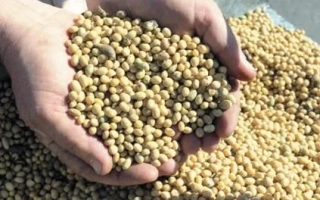
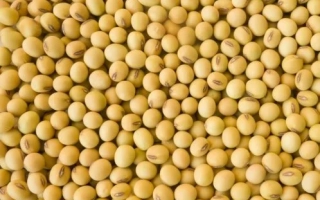
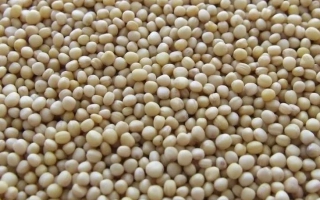
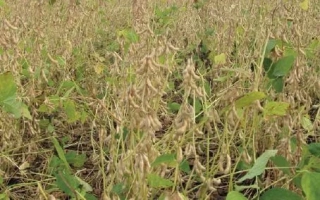
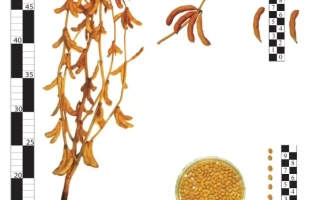
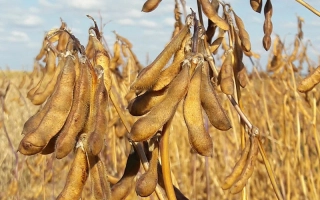
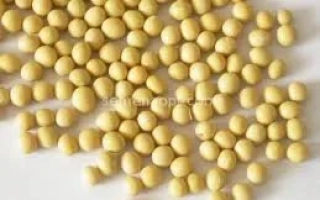
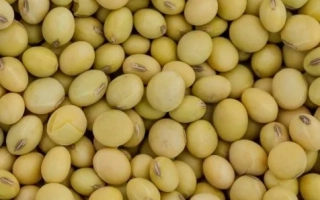
Peipelina is an early-ripening soybean variety (Glycine max (L.) Merr.) recommended for cultivation in the Far Eastern region, including Amur Oblast and Primorsky Krai. The plant has a determinate growth type, with a height of approximately 63–66 cm and an erect form. Leaves are trifoliate, narrow triangular in shape, and flowers are purple. Pods are mostly three-seeded, weakly curved, with gray pubescence; seeds are yellow, shiny, spherical-flattened with a smooth surface and light brown oval hilum. The mass of 1000 seeds ranges from 120.5 to 161.8 g.
The vegetative period lasts an average of 107 days, corresponding to the period from very early to early ripening. The attachment height of lower pods reaches 15–20 cm. The variety is characterized by high yield: average yield in the region is about 22.3–23.6 centners per hectare, with a maximum of up to 34.2 centners per hectare, confirming its potential for intensive cultivation. Optimal sowing times are from May 15 to 25 when the soil warms up to 10 °C at a depth of 5 cm, using narrow-row or wide-row sowing with row spacings of 15, 30, or 45 cm.
Protein content in seeds reaches 38.6–40.1%, while fat content reaches 17.8–21.7%, making the Peipelina variety valuable for producing protein and oilseed products. The plant is distinguished by its resistance and is adapted to the climatic conditions of the Far Eastern region. Due to its agronomic characteristics and high technological indicators, the Peipelina variety is a promising choice for agricultural producers focused on obtaining high-quality and high-yield raw materials.