


SKU #8496
·
587 views
Lugowy mushroom
Mushrooms
User rating
0 votes0% positive reviews
No ratings yet — be the first.
Household Value
Edible Mushroom
Mushroom Type
Gilled mushrooms
Prices in stores
from46.55 €per 1 kg
pack from 0.47 € per 10 g
8 offers from 8 stores
Store offers · 8 from 8 stores
Prices are updated on loadLoading offers…
Available at: 7 Соток · All-market · Best Harvest · Florium · Greenmarket · Kupa · Все Росте · Zelensvit
Aggregator catalog: prices are collected automatically from store websites, normalized by AI and converted at the current exchange rate. Before ordering, confirm the price and availability on the store's website. This block is not indexed by search engines — the data is loaded after the page opens.
About product

Dry mycelium of the mushroom "Lugowy mushroom"
Lugowy mushroom is a good edible mushroom, used fresh (boiled for about 10 minutes in soups, in second dishes and sauces to better preserve its aroma, it can be used without boiling) and dried. It can be salted and pickled. It grows from late May to late October on open spaces, meadows, pastures, in grass along roads, at the edge of forests or on…
Household Value
Edible Mushroom
Mushroom Type
Gilled mushrooms
Description
Dry mycelium of the mushroom "Lugowy mushroom"
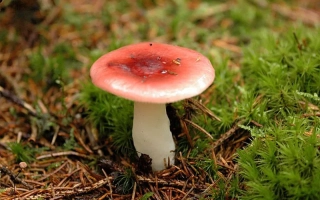
Lugowy mushroom is a good edible mushroom, used fresh (boiled for about 10 minutes in soups, in second dishes and sauces to better preserve its aroma, it can be used without boiling) and dried. It can be salted and pickled. It grows from late May to late October on open spaces, meadows, pastures, in grass along roads, at the edge of forests or on forest clearings, after warm rains, in groups, often in stripes.
Cap: diameter 3-6 cm, initially conical, then convex, spreading, with slightly grooved and often uneven, toothed edge, light-brown in damp weather, fading to pale cream in dry weather.
Gills: sparse, wide, attached, later nearly free, light, ochre-colored in mature mushrooms. Stipe: thin, straight, same color as cap, 4-8 cm long and 0.3-0.5 cm in diameter, fibrous, whitish-fuzzy at base. Flesh: thin, pale yellowish, with pleasant sharp aroma.
Cultivation on wood. This method involves using wood as substrate. In home conditions, winter lugowy mushrooms are cultivated on wood of deciduous trees — willow, poplar, hazel, birch, chestnut, walnut, apple, plum, etc. Wood can be used both as cut logs (stumps) and as live trees. At intervals of 15-20 cm, make grooves or drill holes 3-5 cm deep and 2-3 cm in diameter around the entire perimeter of the stump. Fill the grooves or holes with mycelium. Or split the segment lengthwise, sprinkle a thin layer of mycelium, put halves together and tightly tie with wire.
Mushrooms planted on wood grow for 5-6 years. One package is sufficient for 60-70 kg of wood.
Video · 9 videos
Suggest a video →Specifications
| Household Value | |
|---|---|
| Mushroom Type | |
| Catalog | Catalog → Mushrooms |
Not yet комментариев. Be the first!






See also
Often considered together with this variety


Recently viewed
Products you’ve viewed on this site
Reviews · 0