


SKU #45796
·
78 views
Veselka
Lucerne
User rating
0 votes0% positive reviews
No ratings yet — be the first.
Plant Height
60-95
Registration year
1998
About product

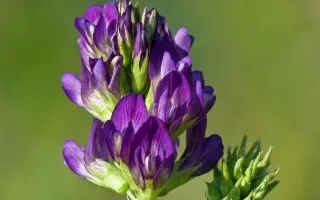
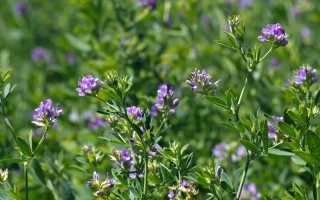
Lucerne variety "Veselka" is a dicotyledonous plant with a straight stem up to 1.2 meters long and a well-branched bush up to 60-95 cm high. This variety is distinguished by its drought, lodging, and seed shattering resistance, ensuring stable yields. The vegetation period lasts about 130 days, with 50-60 days until the first hay cut and 140-155 days until seed harvest. Lucerne regrows quickly in…
Plant Height
60-95
Registration year
1998
Description
Lucerne variety "Veselka" is a dicotyledonous plant with a straight stem up to 1.2 meters long and a well-branched bush up to 60-95 cm high. This variety is distinguished by its drought, lodging, and seed shattering resistance, ensuring stable yields. The vegetation period lasts about 130 days, with 50-60 days until the first hay cut and 140-155 days until seed harvest. Lucerne regrows quickly in spring and after mowing, allowing for several harvests per season.
"Veselka" is widely used in agriculture as a forage crop, providing high-nutritive hay, green, and pasture feed. Lucerne hay is rich in protein (19-20%), contains 21-22% fiber, as well as minerals and organic matter, vitamins, and carotene (44-50 mg). The nutritional value of 1 kg of lucerne hay is 0.56-0.63 feeding units, and 1 kg of green mass — up to 0.22 feeding units. The best feed quality is achieved by cutting during the bud stage.
For sowing, the recommended rate is 15-20 kg/ha for pure stands and 6-8 kg/ha in mixtures with other grasses. Seeds are sown 2-3 cm deep into moist soil and 3-4 cm deep into dry soil. The optimal sowing time is from the end of March to mid-May, when soil temperature is +5-6 °C. Dry matter yield reaches 130-140 c/ha, seeds — 4.0-5.0 c/ha, and green mass — 40-60 t/ha. The price includes sackage and loading; when delivered by your own transport, preferential conditions and agronomic advisory support are provided.
"Veselka" is widely used in agriculture as a forage crop, providing high-nutritive hay, green, and pasture feed. Lucerne hay is rich in protein (19-20%), contains 21-22% fiber, as well as minerals and organic matter, vitamins, and carotene (44-50 mg). The nutritional value of 1 kg of lucerne hay is 0.56-0.63 feeding units, and 1 kg of green mass — up to 0.22 feeding units. The best feed quality is achieved by cutting during the bud stage.
For sowing, the recommended rate is 15-20 kg/ha for pure stands and 6-8 kg/ha in mixtures with other grasses. Seeds are sown 2-3 cm deep into moist soil and 3-4 cm deep into dry soil. The optimal sowing time is from the end of March to mid-May, when soil temperature is +5-6 °C. Dry matter yield reaches 130-140 c/ha, seeds — 4.0-5.0 c/ha, and green mass — 40-60 t/ha. The price includes sackage and loading; when delivered by your own transport, preferential conditions and agronomic advisory support are provided.
Crop & resistance
Crop
Specifications
| Plant Height | 60-95 |
|---|---|
| Registration year | 1998 |
| Catalog | Catalog → Lucerne |
| Legal data |
Show · 1
|
| Country | Ukraine |
Store offers
Prices are updated on loadLoading offers…
Aggregator catalog: prices are collected automatically from store websites, normalized by AI and converted at the current exchange rate. Before ordering, confirm the price and availability on the store's website. This block is not indexed by search engines — the data is loaded after the page opens.
Not yet комментариев. Be the first!
Alternatives
Alfalfa seeds · similar varieties

See also
Often considered together with this variety





Recently viewed
Products you’ve viewed on this site
Reviews · 0