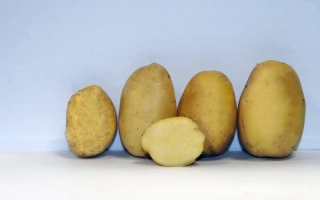
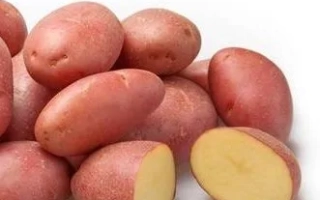
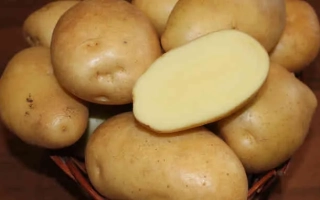
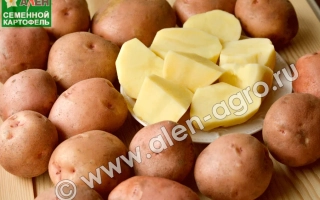
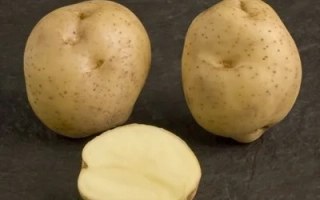
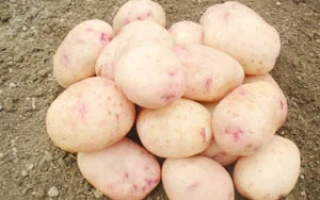
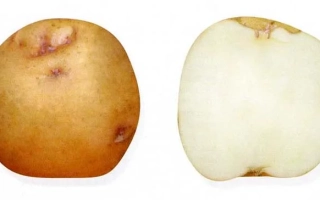
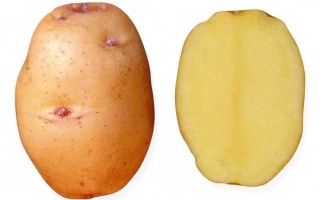
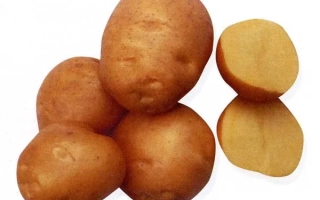
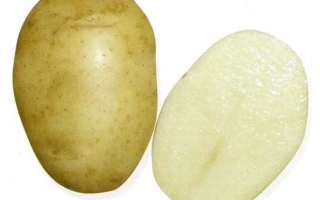
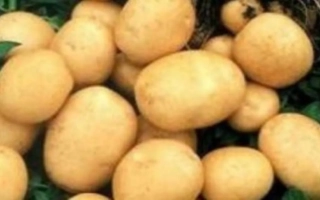
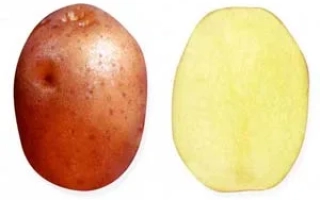
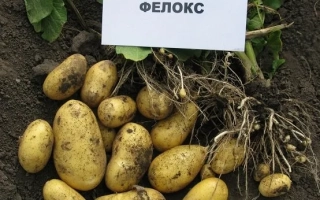
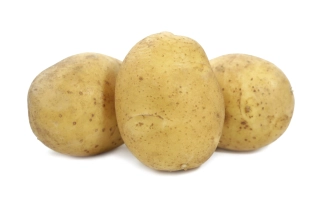
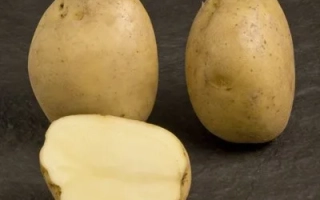
Potato variety Master is a medium-early table variety of Russian selection with a vegetation period of 80-95 days. Plants are tall, intermediate type with upright stems, large dark-green leaves and medium-sized red-purple flowers. Tubers are oval-round in shape with small eyes, yellow skin, and light-yellow flesh. The weight of marketable tubers varies from 72 to 119 grams, and the number of tubers per plant is 9-12.
The variety is characterized by high market yield, ranging from 190 to 379 centners per hectare, with maximum yield reaching 406 centners per hectare, significantly exceeding the standard Bronnitsky. Starch content in tubers is within 16.4-18.0%, which is 0.2-1.5% higher than standard values. Potato Master has good taste qualities and belongs to the culinary type CD, making it suitable for baking, boiling, and making mashed potatoes. Marketability of the variety is 78-94%, and storability reaches 92%, ensuring long-term storage without loss of quality.
The variety is resistant to potato cancer pathogen and late blight on foliage, but tubers show moderate susceptibility to late blight, especially to isolates from the Moscow region and Primorsky Krai, and are susceptible to isolates from the Republic of Komis and Omsk region. Additionally, the variety is susceptible to golden potato cyst nematode. Main cultivation regions for Master variety are the Central and Volgo-Vyat regions of Russia. Due to stable yield, high marketability, and increased starch content, this variety is a valuable choice for agricultural production and consumers.