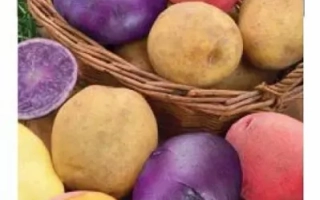
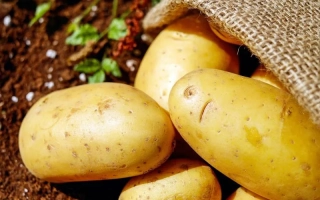
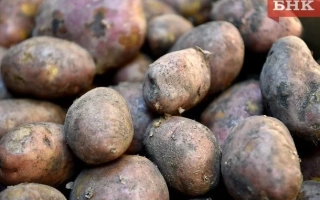
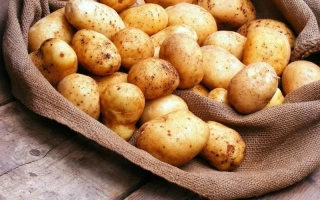
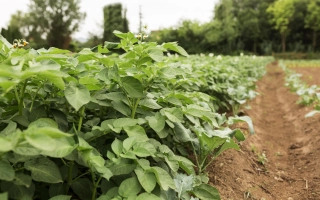
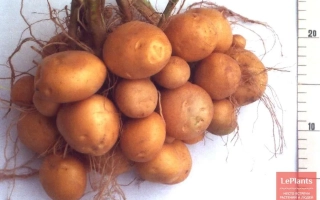
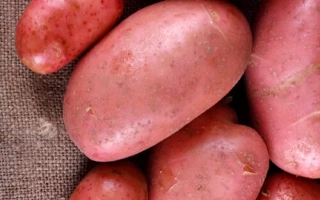
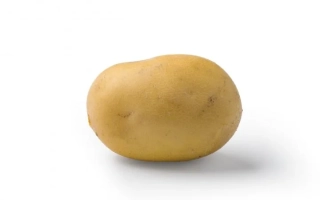
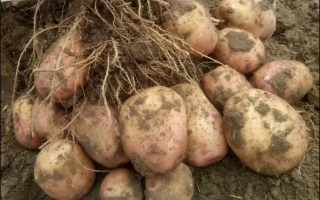
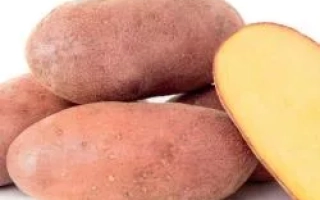
Potato variety BAGIRA is a medium-early table variety developed by Ural breeders and included in the State Register of Selection Achievements of Russia. The plant is tall, intermediate type, semi-erect, with medium-sized, open, dark green leaves. The flower is large, with absent or very weak anthocyanin coloring on the inner side. Tubers are elongated-oval with very small eyes, blue skin, and blue-pink flesh. The average mass of marketable tubers is 111-133 grams, starch content is 12.9%, which is lower compared to other varieties, and the taste is rated as good. Variety BAGIRA is characterized by high marketable yield, ranging from 169 to 204 centners per hectare, which is 29-32 centners higher than the standard variety Nevsky. Maximum yield in some regions reaches 387 centners per hectare, significantly exceeding standard varieties. Tubers have a marketability of 74.6% and storability of 95%, ensuring long-term storage without quality loss. Due to increased content of antioxidants and potassium, this variety has improved nutritional properties, making it attractive to consumers. Potato BAGIRA is characterized by high resistance to several diseases, including potato cancer pathogen and golden potato cyst nematode. It also shows moderate resistance to late blight on foliage and tubers, as well as to mosaic virus, while being resistant to striped mosaic and leaf curling. These traits allow reducing crop protection costs and increasing production efficiency. The variety is well adapted to climatic conditions of the Ural region, making it a profitable choice for farmers seeking a quality and market-demand product.