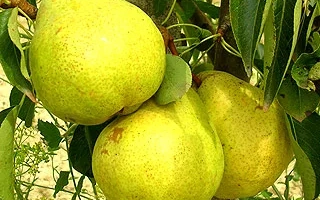
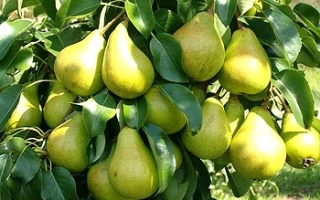
Conference pear variety — a high-yielding and widely cultivated autumn variety, first developed in Britain in the 19th century. Trees are medium- or tall-growing with a broad pyramidal crown, reaching 2.5–3.5 meters in height. Fruit-bearing begins between 3–6 years depending on the rootstock: earlier on quince, later on pear. The variety is distinguished by good winter hardiness and resistance to scab, making it suitable for various climatic conditions and both commercial and amateur gardening. Conference pear fruits have a characteristic elongated-pear shape and weigh 140–220 grams. The fruit skin is dense, matte, green-yellow with rusty spots, especially noticeable on the sun-exposed side. The flesh is creamy with a pleasant pink tint, tender, juicy, aromatic, and slightly oily in texture. The flavor is sweet and rich, confirmed by high tasting ratings. Fruits remain on the tree well, facilitating harvest from late September to early October. The Conference variety is partially self-fertile and can serve as a universal pollinator for most other pear varieties. Due to its high transportability and ability to be stored in a refrigerator for 4–5 months, the fruit is suitable for fresh consumption as well as various forms of canning and drying. This makes Conference pear a universal and reliable choice for gardeners who value quality, yield, and long-term storage.