Mid-late maturing variety, introduced from Finland. Since 1999, it has been included in the State Register of Selection Achievements approved for use in the Northern and Northwestern regions.
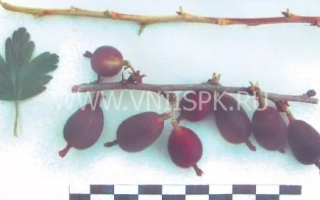
Medium-height, weakly spreading, dense bush with straight, upward and sideways growing stems of medium thickness. Growing stems are green, hairless, and woody stems are light gray. Thorns are strong. Thorns are located along the entire stem length, single- and double-slit, medium and short, sharp, with a straight tip, light-colored, oriented perpendicularly to the stem. Buds are small, elongated, pointed, colored, slightly deviated.
Leaves are medium-sized, green, hairless, soft in texture, with weak gloss, concave along main veins on growing stems and straight on fruiting stems. Leaf margins have large, weakly pointed teeth. Leaf is 3-5-lobed. Basal lobes are weakly developed. Middle lobe is elongated with straight side margins. Side lobes are rounded. The notch between the middle and side lobes is deep and narrow. Leaf base is straight or slightly notched. Leaf petiole is medium length, light green, with weak hair. Leaf is oriented obliquely upward relative to the stem.
Flowers are medium-sized, wide bell-shaped, pale-colored. Sepals are elongated-oval, with rounded or weakly pointed apex, loosely arranged, have pale anthocyanin coloration at the bend. Ovule is oval, hairless. Inflorescence is single- or double-flowered.
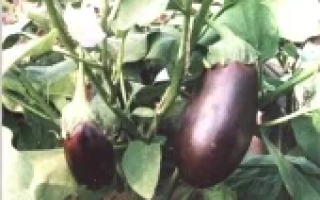
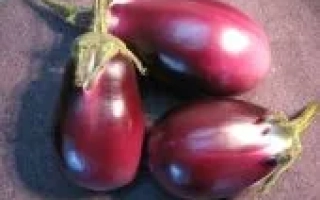
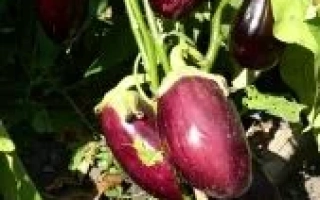
Berries are medium-sized, weighing 3.7 g (2.0-4.4 g), oval and round-oval, dark cherry-colored, with lighter, weakly branched venation, hairless, covered with waxy coating. Seed count: 18-34, averaging 26 per berry. Skin is thin and tough. Flesh is juicy, tart-sweet, almost odorless, rated 4.5 points. Receptacle is long, narrow, closed. Peduncle is short, dark green, thin, cylindrical, hairless. Chemical composition: dry matter — 11.9-17.0%, total sugars — 5.9-11.9%, titratable acidity — 2.5-3.6%, ascorbic acid — 20-39 mg/100 g. Berries are of universal use.
Yield: 7-13 kg of berries per bush. Self-fertility up to 46%. The variety is winter-hardy, resistant to Sphaerotheca, anthracnose, and septoria, affected only slightly.
Advantages of the variety: high winter hardiness, stable fruiting, non-shedding berries, high rooting percentage of all types of cuttings.
Disadvantages of the variety: strong thorniness of stems, medium berry size.