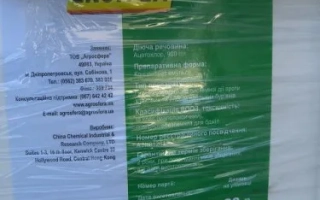
Selective systemic herbicide against annual and some perennial broadleaf dicotyledonous weeds, including those resistant to 2,4-D and MCPA, on cereal crops and corn.
Properties and advantages:
• Alpha-dicamba — a classic herbicide for protecting cereals, which clears the field of annual and perennial rootstock weeds for the following crops in crop rotation.
• Optimal partner for tank-mixing herbicides of groups: 2,4-D, sulfonylureas, triazine, glyphosate, as it prevents resistance development and enhances efficacy due to strong synergism.
• Broad spectrum of action: eliminates over 200 weed species, including field maple, sowthistle species, lettuce, etc.
• Acts by penetrating the plant both through its green parts and through the root system.
• Alpha-dicamba does not have carryover effects on subsequent crops in crop rotation.
• When used in tank mixes with sulfonylurea herbicides (at half-dose), it reduces their impact almost to a minimum without reducing efficacy.
• Completely degrades in soil within the vegetation period.
• Well compatible with herbicides of groups: 2,4-D, sulfonylureas, triazine, glyphosate, as well as with other herbicides, fungicides, and insecticides; however, compatibility and effects on crops should always be checked.
Mode of action: Alpha-dicamba — herbicide with strong systemic action. Acts as a growth inhibitor, affecting photosynthesis and cell division processes in the meristem of weeds. The product completely destroys the weed's foliage and roots. Visually, herbicide effects appear 7-15 days after application (depending on weather conditions and weed species).
General recommendations: Spraying cereal crops (winter and spring wheat, barley, rye, oats) in early spring during the early tillering stage (from 3-5 leaves) until emergence, during early growth phases of annual weeds (2-5 leaves), and during rosette stage (up to 5 cm diameter) of perennial weeds (up to 15 cm height).