


SKU #4414
·
201 views
Currant Star
Currant
Type of Variety
Blackcurrant
Your mark
0 votes
0% positive ratings
Store offers · 4 from 3 stores
4 offers in 3 stores — from 0.49 € per seedling.
Available at: Megasad · s-veto-ru · Yason Agro
Prices are collected automatically from store websites and converted at the current exchange rate. Check the price and availability on the store website before ordering.
Description
Medium-maturing variety, obtained at the Bakcharsky reference station of northern gardening of the Siberian Institute of Horticulture named after M.A. Lisavensky from crossing elite seedling 4-11 and variety Zoya. Authors: L.P. Samolova, G.S. Esenko. Since 1991, included in the State Register of Selection Achievements approved for use in the West Siberian region.
Medium-height, spreading, dense bush. Medium-length, curved, non-woody shoots — light green, shiny, autumn-wilting shoots grayish-white. Medium-sized buds, pointed, sit on short stems, deviated from the shoot. Petiole trace narrow, crescent-shaped.
Five-lobed leaf, medium and small, dark green, slightly wrinkled, in the upper part of the shoot in the shape of a boat. Leaf blade bare, matte, leathery. Lobes wide, short, pointed. Central lobe exceeds lateral ones. Angle between central veins of lateral lobes is straight, lateral lobes widely spaced. Basal lobes well developed. Leaf base heart-shaped with deep notch. Teeth large, blunt. Petiole long, thick, with anthocyanin coloration.
Flowers medium-sized, half-open, calyx lobes medium, bright pink color, bent downward. Inflorescences medium length (up to 7 cm, 5-7 berries), dense, hanging, central axis with anthocyanin "tan", petiole medium, hairless.
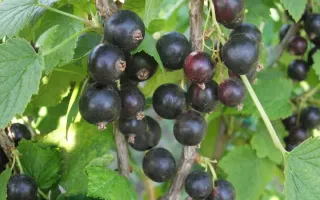
Berries large (1.2-2.0 g), irregular, round, black, matte, with moderate quantity (up to 30) large seeds, simultaneous ripening, good transportability. Receptacle round, open, peduncle long. Taste sour-sweet (4.7 points). Berries of universal use. Chemical composition: dry substances — 13.9%, sugar content — 7.6%, titratable acidity — 2.2%, ascorbic acid — 158.3 mg/100 g.
Winter-hardy variety (-56°C without freezing), drought-tolerant, moderately resistant to diseases and pests, average yield 6.2 t/ha (2.2 kg/plant).
Advantages of the variety: good taste, stable yield, good winter-hardiness, large berry size.
Disadvantages of the variety: moderately resistant to powdery mildew, bud mite.
Crop & resistance
Crop
Specifications
| Type of Variety | |
|---|---|
| Catalog | Catalog → Currant |
No reviews yet. Be the first to share your experience.
Alternatives
Currant saplings · similar varieties


See also
Often considered together with this variety


Recently viewed
Products you’ve viewed on this site
Reviews