


SKU #4418
·
510 views
Emerald Necklace
Currant
User rating
0 votes0% positive reviews
No ratings yet — be the first.
Type of Sort
Blackcurrant
Store offers · 16 from 4 stores
Prices are updated on loadLoading offers…
Available at: AgronomVIP · LuckyFlowers · Сонцесад · Интернет магазин садовых растений Все Сорта
Aggregator catalog: prices are collected automatically from store websites, normalized by AI and converted at the current exchange rate. Before ordering, confirm the price and availability on the store's website. This block is not indexed by search engines — the data is loaded after the page opens.
About product

Medium-late maturing variety, developed at the VNIIS named after I.V. Michurin, inbred offspring from form 13-5-146 (Ojebyn x Black Pearl). Authors: T.V. Zhidkhina, O.S. Rodiukova, S.A. Magomedova. Under state variety testing since 2009.
Medium-height, medium-spreading bush. Woody stems thick and medium, straight, grayish in color, with golden tint, shiny. Buds medium, elongated-oval, gray, so…
Type of Sort
Blackcurrant
Description
Medium-late maturing variety, developed at the VNIIS named after I.V. Michurin, inbred offspring from form 13-5-146 (Ojebyn x Black Pearl). Authors: T.V. Zhidkhina, O.S. Rodiukova, S.A. Magomedova. Under state variety testing since 2009.
Medium-height, medium-spreading bush. Woody stems thick and medium, straight, grayish in color, with golden tint, shiny. Buds medium, elongated-oval, gray, solitary, sit on short petioles, pressed, leaf scar shape rounded-triangular.
Leaf five-lobed, large and medium, green, hairless, slightly shiny, blade soft, smooth, positioned downward obliquely, straight, leaf margin curled downward. Lobes pointed, central lobe larger than lateral. Lateral lobes widely spaced, angle between their midveins acute. Basal lobes well developed. Leaf base with triangular, medium notch. Teeth medium, short, doubly serrated, with clearly defined white "tip", petiole long, medium, colored.
Flowers medium, bell-shaped, sepals purple, free. Inflorescences medium and long (6.5-10.2 cm), dense, hanging. Axis thin, petiole absent.
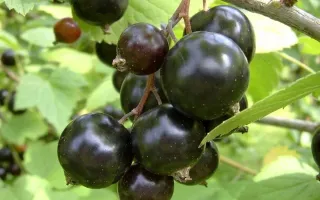
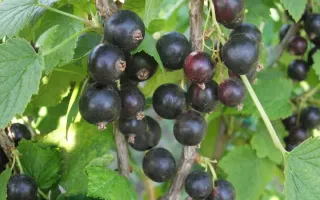
Berries large (1.1-1.2 g), round, one-dimensional, light-yellow with slight green tinge, medium seed count, medium skin, translucent. Calyx rounded, medium, closed, pedicels long and medium, straight. Taste sour-sweet (4.7 points), refreshing. Berries of universal use. Chemical composition: dry matter — 14.6%, total sugars — 10.3%, titratable acidity — 3.2%, ascorbic acid — 158.0 mg/100 g, P-active substances — 406.0 mg/100 g, pectin — 1.7%.
Winter-hardy, highly self-fertile, resistant to powdery mildew and spider mites, average yield 9.6 t/ha (2.9 kg/plant).
Advantages of the variety: high, stable productivity and self-fertility, resistance to powdery mildew and spider mites.
Disadvantages of the variety: medium berry mass.
Video · 7 videos
Suggest a video →Crop & resistance
Crop
Disease resistance
Pest resistance
Specifications
| Type of Sort | |
|---|---|
| Catalog | Catalog → Currant |
Not yet комментариев. Be the first!
Alternatives
Currant saplings · similar varieties






See also
Often considered together with this variety


Recently viewed
Products you’ve viewed on this site
Reviews · 0