Ultra-early maturing variety, obtained at the VIR branch 'Polar Experimental Station' from crossing of forms (Igarka x Stakhanovka Altai) with the variety Imandra. Author S.D. Elsakova. Included in the State Register of Varieties approved for use in the Northern Region in 1992.
Bush is low-growing, weakly spreading, dense. Growing shoots are thick, straight, with medium anthocyanin coloration, slightly hairy. Bud is large, egg-shaped, apex pointed, uncolored, dense.
Leaf three-lobed, with fine notches, large, green. Leaf blade is bare, matte, leathery, smooth, convex. Apex of lobes obtuse, angle between central veins of lateral lobes obtuse. Basal lobes not pronounced. Base of leaf heart-shaped with medium notch. Teeth obtuse, long. Petiole short, medium thickness, green.
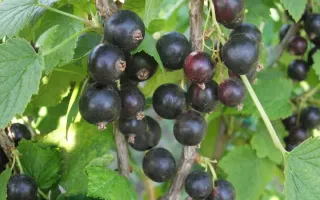
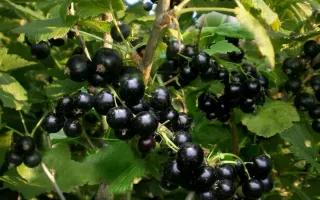
Flowers large, pink. Ovule bare, unpubescent. Ovule shape round, without edges. Inflorescence short (4-7 cm), berries are compactly arranged in clusters of 4-6 fruits. Inflorescence axis thick, straight.
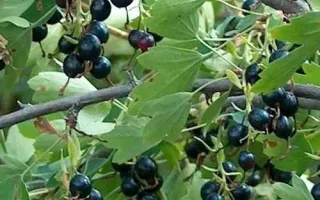
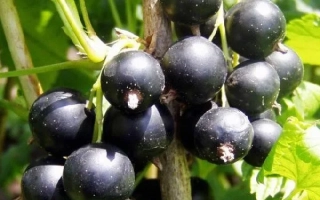
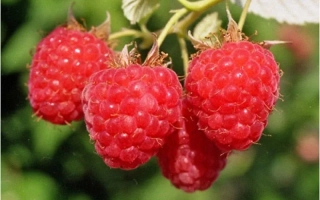
Berries very large (1.5-1.8 g), round, one-dimensional, dark-brown, unpubescent, with pleasant sour-sweet taste (4.8 points) and aroma, intended for general use. Skin thin, dry detachment. Calyx small, closed. Peduncle medium, green, thin. Chemical composition: dry matter — 12.2%, total sugars — 6.2%, organic acids — 4.5%, ascorbic acid — 140.0 mg/100 g.
Variety is highly winter-hardy, self-fertile (67-70%), average yield 11.5 t/ha (3.5 kg/plant), possesses field resistance to anthracnose and septoria, slightly damaged by sawfly and pleisiocoris bug.
Advantages of the variety: ultra-early maturing, high-yielding, resistant to anthracnose and septoria, good taste qualities.
Disadvantages of the variety: susceptible to powdery mildew, berries drop off when fully ripe.