


SKU #4386
·
368 views
Gerkules
Currant
User rating
1 vote100% positive reviews
No ratings yet — be the first.
Type of Sort
Blackcurrant
Prices in stores
from3.38 €per seedling
pack from 4.08 € per 1 pcs
6 offers from 2 stores
Store offers · 6 from 2 stores
Prices are updated on loadLoading offers…
Available at: Все для сада · Agromir
Aggregator catalog: prices are collected automatically from store websites, normalized by AI and converted at the current exchange rate. Before ordering, confirm the price and availability on the store's website. This block is not indexed by search engines — the data is loaded after the page opens.
About product

Late-maturing variety, developed at the Mountain Horticulture Department of the Siberian Institute of Horticulture named after M.A. Lisavenko, by crossing the variety 'Pлотноки-стная' with seedlings from open pollination of a selected form of the Siberian subspecies from the river Ilyumen'. Author: L.N. Zabelina. Under state variety testing since 2000.
Plant is tall, upright, medium density. G…
Type of Sort
Blackcurrant
Description
Late-maturing variety, developed at the Mountain Horticulture Department of the Siberian Institute of Horticulture named after M.A. Lisavenko, by crossing the variety 'Pлотноки-стная' with seedlings from open pollination of a selected form of the Siberian subspecies from the river Ilyumen'. Author: L.N. Zabelina. Under state variety testing since 2000.
Plant is tall, upright, medium density. Growing shoots are thick and medium thickness, green with a pinkish blush; woody shoots are thick, light-brown, weakly shiny. Buds are medium-sized, oval-rounded, single, clustered and deviated at the top of the shoot, light green with a pinkish blush.
Leaves are three-lobed, large, bright green, dense, smooth, without hairs. Lobes are pointed, central lobe is broad. Angle between central veins of side lobes is straight. Basal lobes are weakly developed. Leaf base is deep, cleft, closed in young leaflets. Teeth are small, rounded. Leaf petioles are thick, medium length and short, hairy, light green, positioned at an acute angle (45-90°) to the shoot.
Flowers are medium-sized, sepals creamy with pink margins, petals creamy and not fused, deviated. Cymes are long (8-12 berries), dense, single per node, medium thickness, green, weakly hairy. Pedicels are short, medium thickness, weakly hairy.
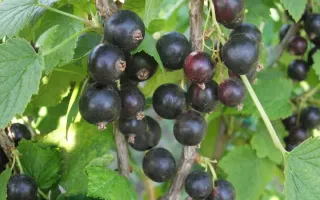
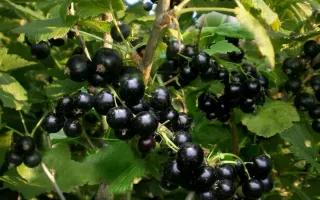
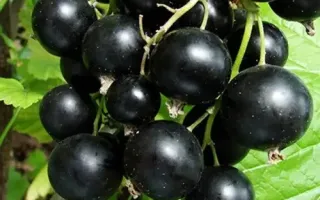
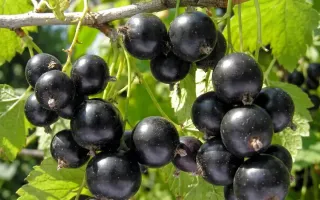
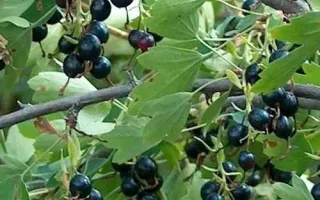
Berries are large and very large (1.6-3.6 g), round, one-sided, black, weakly shiny, with a slight bloom, dry detachment, with many small, light-brown seeds. Calyx is medium-sized, falling off. Skin is thin, elastic. Taste is dessert. Chemical composition of berries: dry substances - 18.4%, total sugars - 8.7%, titratable acidity - 2.2%, ascorbic acid - 177 mg/100 g.
Cold-hardy variety, high-yielding (11.1 t/ha), self-fertile, resistant to anthracnose and septoria.
Advantages of the variety: high stable yield, tolerance to soil mechanical composition and fertility, high winter hardiness of generative buds and flower resistance to spring frosts, dessert taste and berry technology.
Disadvantages of the variety: insufficient resistance to bud mite.
Video · 4 videos
Suggest a video →Crop & resistance
Crop
Disease resistance
Specifications
| Type of Sort | |
|---|---|
| Catalog | Catalog → Currant |
Not yet комментариев. Be the first!
Alternatives
Currant saplings · similar varieties






See also
Often considered together with this variety


Recently viewed
Products you’ve viewed on this site
Reviews · 0