
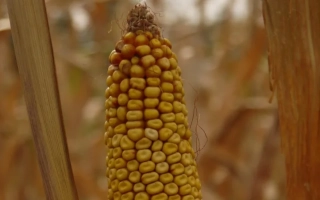

SKU #56247
·
29 views
RM 146
Corn
User rating
0 votes0% positive reviews
No ratings yet — be the first.
FAO
90–1240
Ripening
110-120 days, Mid-late maturity
Hybrid Type
Simple Hybrid
Use Direction
Grain, Silage
About product

Corn RM 146 is a medium-late, simple hybrid with high yield potential and resistance to various adverse factors. The vegetation period is approximately 115 days, which is 5 days shorter than the standard period, and the thousand-grain weight ranges from 300 to 340 grams. Plants of medium to high height (260-280 cm) have straight, slightly curved leaves with a small angle between the leaf blade and…
FAO
90–1240
Ripening
110-120 days, Mid-late maturity
Hybrid Type
Simple Hybrid
Use Direction
Grain, Silage
Description
Corn RM 146 is a medium-late, simple hybrid with high yield potential and resistance to various adverse factors. The vegetation period is approximately 115 days, which is 5 days shorter than the standard period, and the thousand-grain weight ranges from 300 to 340 grams. Plants of medium to high height (260-280 cm) have straight, slightly curved leaves with a small angle between the leaf blade and stem. The ear attachment height is within 90-100 cm, which facilitates harvesting and reduces lodging risk.
The hybrid exhibits high resistance to root and stem lodging, as well as low susceptibility to fusarium ear and stalk borer infestations. The plant is well-adapted to drought, heat, and cold, making it suitable for cultivation in various climatic zones, including forest-steppe, steppe, and meadow regions. Corn RM 146 demonstrates high stress resistance and rapid grain drying after harvest, which simplifies subsequent processing and storage of the crop.
The recommended planting density depends on moisture conditions: in dry areas, 50,000–55,000 plants per hectare are optimal, while in well-watered zones — 60,000–65,000 plants per hectare. The hybrid responds well to fertilizer application and irrigation, enabling high yields — up to 15–20 tons of grain and 45–80 tons of silage per hectare. Due to its characteristics, RM 146 is suitable for both grain production and silage, ensuring a stable and high-quality harvest.
The hybrid exhibits high resistance to root and stem lodging, as well as low susceptibility to fusarium ear and stalk borer infestations. The plant is well-adapted to drought, heat, and cold, making it suitable for cultivation in various climatic zones, including forest-steppe, steppe, and meadow regions. Corn RM 146 demonstrates high stress resistance and rapid grain drying after harvest, which simplifies subsequent processing and storage of the crop.
The recommended planting density depends on moisture conditions: in dry areas, 50,000–55,000 plants per hectare are optimal, while in well-watered zones — 60,000–65,000 plants per hectare. The hybrid responds well to fertilizer application and irrigation, enabling high yields — up to 15–20 tons of grain and 45–80 tons of silage per hectare. Due to its characteristics, RM 146 is suitable for both grain production and silage, ensuring a stable and high-quality harvest.
Crop & resistance
Crop
Disease resistance
Pest resistance
Specifications hover over for a hint about the specification
|
FAO
FAO
Corn hybrids are classified by maturity groups and by the FAO number. All corn hybrids are distributed according to the FAO scale. Under Central European conditions, a difference of 10 FAO units between hybrids results in a 1-2 day difference in their maturity. The higher the FAO... |
90–1240 |
|---|---|
| Ripening | 110-120 days, Mid-late maturity |
| Hybrid Type | |
|
Use Direction
Use Direction
Dual-purpose hybrids: for silage and grain in all growing regions. These are "stay-green" type hybrids, meaning the plants remain green for a longer period. However, this does not affect the sugar, cellulose, and hemicellulose content, nor the degree of lignification of the plant... |
|
|
Recommended Density
Recommended Density
Optimal productivity is achieved at a planting density of 4000-5500 plants/ha. Possible planting scheme: 300-500x40-80 cm. |
50-55 thousand pcs/ha, 60-65 thousand pcs/ha |
| Registration year | 2022 |
| Catalog | Catalog → Corn |
| Legal data |
Show · 1
|
| Country | Russia |
Store offers
Prices are updated on loadLoading offers…
Aggregator catalog: prices are collected automatically from store websites, normalized by AI and converted at the current exchange rate. Before ordering, confirm the price and availability on the store's website. This block is not indexed by search engines — the data is loaded after the page opens.
Not yet комментариев. Be the first!
Alternatives
Maize seeds · similar varieties




See also
Often considered together with this variety





Recently viewed
Products you’ve viewed on this site
Reviews · 0