


SKU #4035
·
274 views
Successor
Cherry, Sour Cherry
User rating
0 votes0% positive reviews
No ratings yet — be the first.
Type of Sort
Steppe Cherry
About product

Selected form of steppe cherry from open pollination. Originator — South Ural Research Institute of Fruit and Vegetable Growing and Potato Growing (YUUNIPOK). Author: A.E. Pankratova. Undergoes state testing since 2002. Compact, beautifully shaped bush, medium growth, 1.5 m tall, spherical, medium density, good leafing. Shoot straight, medium thickness, grayish-silver, slightly glaucous, bare. Bu…
Type of Sort
Steppe Cherry
Description
Selected form of steppe cherry from open pollination. Originator — South Ural Research Institute of Fruit and Vegetable Growing and Potato Growing (YUUNIPOK). Author: A.E. Pankratova. Undergoes state testing since 2002.
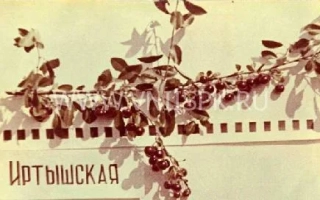
Compact, beautifully shaped bush, medium growth, 1.5 m tall, spherical, medium density, good leafing. Shoot straight, medium thickness, grayish-silver, slightly glaucous, bare. Bud medium, elongated, bent away from shoot. Leaf oval, medium, 5.5 cm long, 3 cm wide, apex bluntly pointed, base acute, dark green color, margin serrated, sometimes doubly serrated, glabrous, glossy. Leaf blade slightly folded along central vein. Stipules absent. Stipules medium, yellow-green, bean-shaped. Petiole short, medium thickness, green, without anthocyanin coloring. Flowers (4 per inflorescence) small, white color, petals loosely arranged, broadly oval shape, slight corrugation. Stigma slightly above anthers. 22 stamens. Calyx tube narrow-bowl-shaped, calyx lobes oval with slight toothed edges, surface glabrous. Flowering and fruiting type mixed: on one-year growth 45%, on flowered branches and twigs 55%.
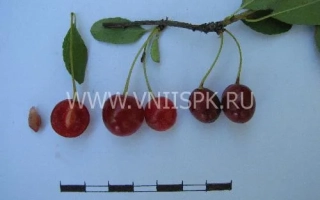
Fruit weight 4.2 g, shape broadly round, apex slightly depressed, cavity medium with small indentation. Ventral suture barely noticeable, small. Fruit color dark red, skin absent. Flesh color red, juice red, flesh texture medium. Pedicel length 4 cm, thin. Stone egg-shaped, weight 0.14 g, constitutes 7% of fruit weight, light-yellow color, separates easily from flesh. Fruit appearance rated 4.8 points, flesh juicy, flavor sour-sweet, taste rating 4.7 points, fruit detachment from pedicel dry and easy. Fruits suitable for all uses: compotes, jams, jellies. Dry matter content 12.2%, sugars 9.7%, free acids 13%, ascorbic acid 19.2 mg%.
Flowering period — May 17-27. Ripening period — July 12-27, simultaneously. Enters fruiting on 4th year, plant longevity up to 20 years. Yield above average — 4-5 kg per bush, equivalent to 5.2 t/ha with planting scheme 4 x 2.
Partially self-fertile. High cold resistance of tree, shoots and generative buds. High resistance of flowers to spring frosts. High drought resistance, heat tolerance, and resistance to coccomyces. Suitable for commercial and hobby gardens.
Advantages of the variety: high winter hardiness, disease and pest resistance; high fruit flavor quality; naturally growing, beautifully shaped bush, requiring no special pruning.
Disadvantages of the variety: none identified.
Crop & resistance
Crop
Disease resistance
Specifications
| Type of Sort | |
|---|---|
| Catalog | Catalog → Cherry, Sour Cherry |
Store offers
Prices are updated on loadLoading offers…
Aggregator catalog: prices are collected automatically from store websites, normalized by AI and converted at the current exchange rate. Before ordering, confirm the price and availability on the store's website. This block is not indexed by search engines — the data is loaded after the page opens.
Not yet комментариев. Be the first!
Alternatives
Cherry saplings · similar varieties


See also
Often considered together with this variety




Recently viewed
Products you’ve viewed on this site
Reviews · 0