
Waikavirus
Waikavirus
Waikavirus is a genus of plant viruses within the Secoviridae family, characterized by a single-stranded RNA genome. The most well-known representative is the Rice tungro spherical virus.
What the section contains
Waikavirus
These pathogens are highly specialized, infecting primarily cereal crops. The virions are non-enveloped and possess an icosahedral symmetry, which is typical for this taxonomic group.
Waikaviruses are not transmitted mechanically through sap or via seeds. Instead, they rely strictly on insect vectors, primarily leafhoppers, to move from plant to plant.
The transmission is semi-persistent, meaning the vector retains the virus for a specific duration after feeding on an infected host, facilitating rapid spread within a field.
Understanding the biology of these viruses is essential, as the viral replication cycle is tightly linked to the physiological status of the host plant and the feeding habits of the vector.
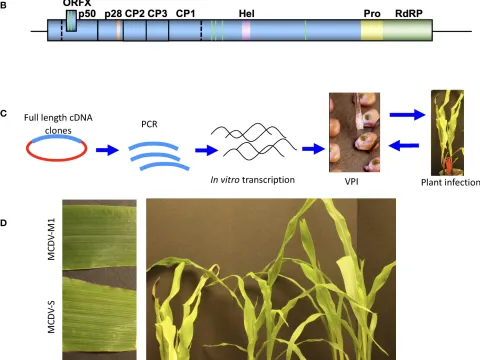
The most prominent symptom is plant stunting, where infected individuals appear significantly shorter and less developed than healthy plants in the same field.
Chlorosis is a frequent sign, presenting as yellowing or orange discoloration of the leaves, which often starts from the tips or margins of older foliage.
Tiller formation is severely inhibited, leading to a thin and sparse canopy that prevents the crop from achieving its full yield potential.
Flowering and grain development are often disrupted, resulting in empty panicles or poorly filled grains, causing a major reduction in overall harvest quality.
Root systems in infected plants are often underdeveloped, making the crops more susceptible to drought stress and subsequent soil-borne pathogens.
The spread of the disease is directly proportional to the population density of the insect vectors, which act as the sole carriers of the viral infection.
Warm, humid conditions generally favor the rapid reproduction of leafhoppers, leading to explosive increases in virus prevalence throughout the growing season.
The presence of weeds or alternative host plants around the perimeter of fields provides a crucial refuge for vectors to survive and harbor the virus.
Delayed planting or unsynchronized sowing schedules often expose young, vulnerable seedlings to the peak activity of migratory insect populations.
Continuous cropping without proper rotation allows the virus to persist in the environment, creating a cycle of infection that carries over from one season to the next.
Waikaviruses cause severe economic losses by significantly depressing plant growth and reducing grain yield, with potential losses exceeding 50 percent in sensitive varieties.
The physiological impairment of plants leads to poor grain filling, which reduces the market value and nutritional quality of the final harvest.
Field-wide infections result in uneven maturation, which creates logistical challenges during harvesting and contributes to high post-harvest losses.
Secondary infections by opportunistic fungi are common in virally stressed plants, further weakening the crop and increasing the cost of chemical protection.
Farmers are often forced to increase their use of pesticides to manage vectors, which negatively impacts profitability and environmental sustainability.
The primary control strategy involves managing vector populations through targeted insecticide applications, particularly during periods of high insect activity.
Planting resistant or tolerant cultivars remains the most effective and sustainable method for preventing widespread epidemics in commercial cereal production.
Field sanitation, including the aggressive management of weeds and volunteer plants, is vital to eliminate reservoirs that sustain the virus in the off-season.
Strategic timing of sowing helps escape the peak migration periods of vectors, ensuring that crops have a better chance to reach maturity before the virus spreads.
- Regular monitoring of vector populations using yellow sticky traps.
- Using high-quality, virus-free seeds and planting materials.
- Implementing spatial isolation between newly planted crops and older fields.
- Promoting healthy soil management to boost the natural vigor of the crop.