
Scrophularia mosaic virus
Tymovirus scrophulariae
The causative agent of this disease is the Tymovirus scrophulariae, a member of the genus Tymovirus. It is a single-stranded RNA virus that primarily targets plants within the Scrophulariaceae family.
What the section contains
Scrophularia mosaic virus
The virus particles are small, isometric, and highly stable, allowing them to remain infectious in dried plant tissues and on various surfaces, including farming equipment, for extended periods.
Once inside the plant, the virus replicates using the host's cellular machinery, spreading systematically through the phloem. This systemic infection means the entire plant becomes a reservoir for the virus.
Unlike fungi or bacteria, this virus lacks cell walls and organelles, relying entirely on the host organism for its survival and proliferation within a given agricultural environment.
The genetic stability and high specificity of the virus contribute to its persistence in perennial hosts, making it a significant challenge for long-term agricultural and horticultural management.
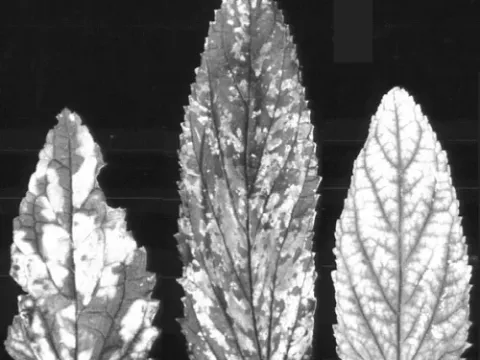
The most prominent sign of infection is a mosaic pattern on the foliage, characterized by alternating patches of light green, yellowish, and deep green discoloration across the leaf surface.
Leaves often exhibit morphological changes, such as curling, wrinkling, or significant reduction in size. The foliage may appear puckered, indicating a disruption in normal cell division and development.
Stunted growth is a hallmark of this disease. Infected plants show shortened internodes and a generally weak, chlorotic appearance that makes them stand out against healthy vegetation.
Floral development is severely impacted; buds may fail to open, and flowers that do develop are often smaller, deformed, or display an irregular, bleached color pattern.
In advanced stages, necrotic spots or lesions may appear as the tissue dies, eventually leading to premature leaf drop and the overall decline of the plant's structural integrity.
The primary mode of transmission is through sap-feeding insect vectors, most notably aphids and leafhoppers, which acquire the virus while feeding on infected sap and transmit it to healthy hosts.
Warm and humid weather conditions are highly conducive to the disease, as these conditions stimulate the population growth and movement of insect vectors across the field or garden.
Mechanical transmission is another critical factor. The virus can be easily spread during pruning, harvesting, or even through simple handling if tools are not properly disinfected between plants.
The presence of perennial weeds from the Scrophulariaceae family provides an alternative host, allowing the virus to overwinter and persist in an area even when the main crop is absent.
High plant density encourages the spread of the virus through contact. When leaves of infected and healthy plants brush against each other, the chances of localized transmission increase significantly.
The virus causes severe economic losses by destroying the marketability of ornamental crops, rendering them unfit for sale due to their unsightly mosaic appearance and deformed growth.
Photosynthetic efficiency is drastically reduced, leading to a decline in the plant's metabolic output. This causes the plant to become weak and highly vulnerable to secondary pathogens.
Infected plants have poor vigor and are unable to produce healthy reproductive organs, which prevents the successful harvesting of seeds or propagation material from these lines.
The systemic nature of the disease often results in the slow death of the plant, especially if environmental stressors like drought or heat are present, creating a significant impact on plant mortality.
The persistence of the virus in the environment means that it can contaminate clean soils and planting areas, necessitating long-term exclusion strategies and strict sanitation protocols.
The most effective strategy for managing the virus is the prompt removal and destruction of all infected plants. Burning or deep burial is recommended to ensure the virus is completely eliminated.
Rigorous vector control is essential. Implementing an integrated pest management (IPM) plan that includes targeted insecticide use helps to suppress aphid populations and limit viral spread.
Tool sanitation is non-negotiable. Always disinfect cutting shears, knives, and other equipment using ethanol or specialized sanitizing solutions between each individual plant to prevent mechanical transmission.
Maintain a weed-free buffer zone around the cultivation area. Eliminating host weeds reduces the local reservoir of the virus and prevents it from jumping into the main crop.
Prioritize the use of certified virus-free planting stock. Starting with healthy material is the best defense against introducing this persistent pathogen into a previously clean environment.