
Septoria leaf spot of celery
Celavirus apii
Description
Symptoms
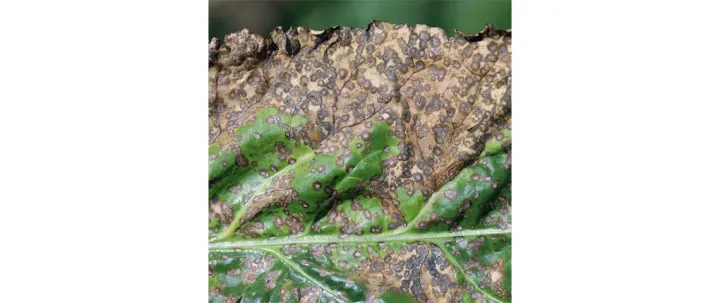
Early symptoms appear as small, yellow, circular to irregular spots on the leaves. As the disease progresses, these spots darken and become grayish-brown with a distinct chlorotic halo.
A definitive diagnostic feature of Septoria leaf spot is the presence of tiny, black, pimple-like dots (pycnidia) scattered within the center of the necrotic spots, visible to the naked eye.
When environmental conditions are humid, the lesions expand and coalesce, leading to extensive tissue death. The affected foliage eventually turns yellow, withers, and dies prematurely.
The infection can also affect the petioles and stems of the celery plant, causing elongated lesions that may lead to the twisting or breakage of the plant stalks.
Severe infections reduce the vigor of the whole plant, making it look stunted and unmarketable, as the loss of photosynthetic area prevents the proper development of the celery crown.
Pathogen
The disease is caused by the fungus Septoria apiicola (syn. Septoria apii), a member of the class Coelomycetes. It survives as a pathogen by producing pycnidia — tiny, dark, flask-shaped structures embedded in the plant tissue.
This fungus overwinters primarily on infested crop debris left in the field, in the soil, and can be transmitted through infected celery seeds over long periods of time.
Primary infections occur in the spring when spores are splashed onto foliage by rain or irrigation water. The spores can also be spread by wind, insects, or human activity within the field.
The lifecycle of the fungus is moisture-dependent. Under favorable conditions, conidia germinate and penetrate the celery leaves through stomata within a few hours of contact.
As the pathogen reproduces, it creates numerous generations of spores throughout the growing season, which can lead to severe epidemics in commercial celery production if left unchecked.
Conditions for development
Septoria leaf spot thrives in cool to moderate temperatures, typically between 15°C and 25°C, accompanied by high relative humidity and prolonged periods of leaf wetness.
Frequent rainfall, overhead irrigation, and heavy morning dews provide the necessary moisture for the spores to germinate and infect healthy celery leaves.
Dense planting patterns that limit air circulation are a major factor in the rapid spread of the disease, as they allow humidity levels to remain high around the plant canopy.
Fields with poor drainage or those located in areas prone to morning fog are at higher risk of experiencing outbreaks compared to well-ventilated, sunny locations.
The pathogen is highly active in environments where the same crop is grown repeatedly in the same soil, as the fungal population builds up over several cropping cycles.
Why it matters
Septoria leaf spot is considered one of the most destructive diseases for celery worldwide, capable of causing substantial yield losses, often exceeding 50% in severe weather conditions.
Because the disease consumes the leaf surface area, the plant cannot produce enough carbohydrates, which leads to significantly smaller and lower-quality celery bunches at harvest time.
The aesthetic damage from the necrotic spots makes the celery unfit for fresh market sales, drastically reducing the economic return for the grower.
Secondary infections, such as soft rots, frequently attack the weakened tissues of plants already stressed by Septoria, resulting in rapid decay during post-harvest storage and transport.
The overall quality, flavor, and shelf-life of the celery are compromised, leading to massive financial losses due to the product failing to meet food safety and quality standards.
Protection
Effective management begins with the use of certified, disease-free seeds and performing hot water seed treatment or fungicide seed dressing before planting to eliminate initial inoculum.
Crop rotation is essential; growers should avoid planting celery or related umbelliferous crops in the same field for at least three to four years to break the infection cycle.
Implementing wide row spacing and ensuring proper weed control improves airflow within the crop, which helps keep the foliage dry and inhibits fungal spore germination.
- Applying protective fungicides during the season, particularly when the weather forecast indicates high humidity or rain.
- Removing and destroying infected plant debris immediately after harvest to reduce the amount of inoculum available for the next season.
- Using drip irrigation instead of overhead systems to keep foliage dry.
In cases of confirmed infection, timely application of systemic fungicides (such as those from the azole or strobilurin groups) can help manage the spread if applied early enough.
Discussion
No discussions yet — be the first.