
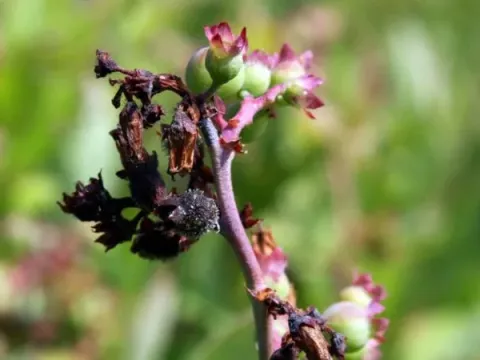
Blueberry mosaic virus
Soymovirus maculavaccinii
The primary symptoms of infection manifest as chlorotic spots on the leaves of highbush blueberries. These spots often develop into a mosaic or diffuse pattern, significantly impacting the aesthetic and physiological state of the shrub.
What the section contains
Blueberry mosaic virus
As the disease progresses, necrotic areas may appear on the leaf blades, which darken and desiccate over time. This leads to premature yellowing and leaf drop, reducing the photosynthetic surface of the plant.
The virus frequently causes deformation of the foliage. Leaves may become curled, asymmetrical, or smaller in size, which is a clear indicator of a systemic metabolic disturbance within the plant tissue.
Another characteristic sign is the stunted growth of new shoots during the growing season. Branches become brittle, and internodes are shortened, making the shrub appear weak and stunted.
During the fruiting season, infected plants show a reduced number of berries. The remaining fruit develops slowly, often exhibiting poor flavor and uneven ripening, which affects the overall market quality.
The causative agent of the disease is Soymovirus maculavaccinii, a virus belonging to the genus Soymovirus. It is a highly specialized pathogen that primarily targets species within the Ericaceae family.
The virus acts as an obligate parasite, systemically infecting the host plant. It migrates through the phloem, eventually reaching all organs, including the root system and developing terminal buds.
The biology of the pathogen is closely tied to insect vectors. Viral particles accumulate in the hemolymph of insects, allowing for efficient transmission during feeding sessions on healthy plant tissues.
The incubation period of the virus varies based on environmental conditions and the plant's physiological state. In warmer temperatures, symptoms typically manifest more rapidly following the initial infection.
The virus genome exhibits high specificity, which restricts its host range. However, the presence of latent infections in planting stock presents a significant threat to newly established blueberry fields.
The spread of the virus within commercial plantations is heavily influenced by the activity of insect vectors. Aphids and other sucking pests are the primary drivers of viral transmission throughout the season.
Favorable conditions for viral development include high relative humidity and moderate temperatures. These conditions promote the migration of insect vectors between infected and healthy bushes.
Mechanical transmission via contaminated pruning tools is a critical pathway for the spread of the virus. Failure to sanitize equipment between bushes facilitates the movement of infected sap to healthy tissue.
Improper fertilization or poor soil conditions stress the plants, weakening their natural defense mechanisms. Stressed blueberry plants are generally more susceptible to viral infections.
Weeds surrounding the plantation can act as reservoirs for both the virus and its vectors. Many perennial weed species maintain the pathogen throughout the year, even when the blueberry plants are dormant.
The main economic harm caused by this virus is a significant reduction in yield. Infected shrubs fail to set high-quality fruit buds, leading to substantial financial losses for the grower.
Systemic viral infection reduces the plant's hardiness. Infected bushes are more prone to winter damage, which leads to thinning of the plantation and the need for costly replanting.
Fruit quality is severely impacted; berries become smaller, less flavorful, and lose their shelf life, making them unsuitable for the fresh market or distribution.
Long-term presence of the virus leads to chronic decline in the plant's vigor. Eventually, such plants must be removed, as they serve as constant sources of infection for the entire field.
Viral diseases lack curative chemical treatments. This forces producers to rely on destructive methods like roguing, which increases operational costs and reduces the total productive area.
The most important control measure is the use of certified, virus-free planting material. Sourcing nursery stock from reputable producers is the best way to prevent the introduction of the virus.
Integrated pest management (IPM) to control insect vectors is essential. Regular applications of insecticides against aphids and other sucking pests significantly reduce the risk of viral spread.
Strict hygiene protocols during pruning are mandatory. Sanitizing shears with alcohol or disinfectant solutions after pruning each bush prevents mechanical transmission of the virus.
Regular field scouting is necessary for early detection. Upon identifying symptomatic plants, immediate removal and destruction of the infected shrub are required to contain the infection.
Maintaining optimal plant nutrition promotes overall vigor. Healthy, well-nourished blueberry plants are better equipped to withstand viral pressure and maintain productivity under field conditions.