
Blueberry ring spot virus
Ophiovirus vaccinii
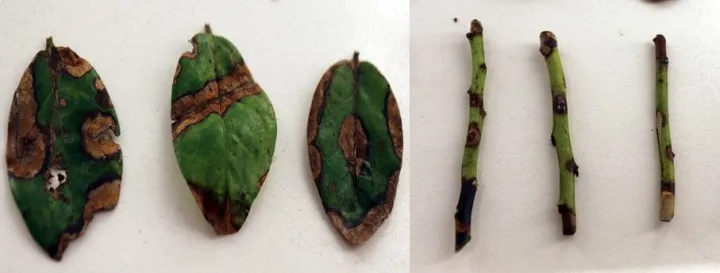
Description
Symptoms
The primary symptom of the infection involves the appearance of chlorotic rings, arcs, or wavy line patterns on the leaves of the blueberry bush.
Symptoms often emerge early in the season, becoming more prominent as temperatures rise and the physiological activity of the plant increases.
Infected bushes frequently exhibit reduced vigor, shortened internodes, and visible stunting compared to healthy specimens in the same field.
Leaves may show mosaic-like discoloration or deformation, which can reduce the plant's overall photosynthetic capacity throughout the growing season.
The severity of visual symptoms can vary significantly depending on the blueberry cultivar, plant age, and environmental stress factors.
Pathogen
The disease is caused by Ophiovirus vaccinii, a member of the Ophiovirus genus, which is known to infect various Vaccinium species.
The virus contains a segmented, single-stranded RNA genome, characterizing it as a systemic pathogen that colonizes the plant's vascular system.
Ophiovirus vaccinii is a chronic infection, meaning once a bush is colonized, it remains a permanent host for the virus for the rest of its life.
The virus is largely spread through infected vegetative propagation materials, such as cuttings or nursery stock taken from diseased parent plants.
As a systemic infection, it moves through the entire plant, affecting both new growth and the root system, complicating any potential cure or sanitation.
Conditions for development
The primary mode of transmission in commercial fields is the introduction of latently infected nursery stock during the establishment of new plantings.
Research suggests that soil-borne nematodes, specifically members of the Xiphinema genus, may act as vectors for transmitting the virus through the soil.
Environmental factors, such as improper pH levels or soil moisture stress, can exacerbate symptom expression and weaken the plant's resistance.
The virus can persist in the soil or in infected root debris, posing a risk of re-infection if new bushes are planted too soon on the same site.
Mechanical transmission through contaminated pruning tools is a significant risk factor if proper hygiene protocols are not strictly followed.
Why it matters
Blueberry ring spot virus leads to significant economic loss by reducing both the total yield and the quality of the harvested fruit.
Fruit size and uniformity are often compromised, making the crop less desirable for fresh market sales and decreasing profitability.
Infected bushes suffer from long-term physiological decline, making them more susceptible to other biotic and abiotic stresses.
The progressive nature of the disease often requires the premature removal and destruction of affected bushes, disrupting field production schedules.
Overall, the presence of the virus negatively impacts the health and longevity of the blueberry plantation, leading to inconsistent orchard performance.
Protection
The most effective strategy is the use of high-quality, certified, virus-free nursery stock sourced from reputable and tested suppliers.
Implementation of rigorous sanitation practices, including the disinfection of pruning tools with appropriate solutions, is essential to limit mechanical spread.
Proactive monitoring and the immediate roguing (removal) of symptomatic plants are critical to prevent the secondary spread within the plantation.
Managing soil-borne vectors, particularly nematode populations, is necessary in areas where the virus has been identified in the field.
- Strict adherence to quarantine and testing protocols for new planting material.
- Control of weeds that may harbor the virus or its vectors.
- Maintenance of optimal fertility and water management to support plant health.
Discussion
No discussions yet — be the first.