
Arracacha potyvirus
Potyvirus arracachae
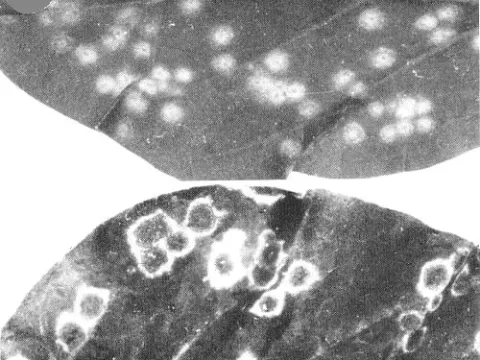
Arracacha potyvirus primarily manifests through distinct chlorotic spotting and striping on the leaves of the arracacha plant. These symptoms often present as mosaic-like patterns that vary in intensity depending on the host variety.
What the section contains
Arracacha potyvirus
Leaf deformation is a common secondary symptom, where the foliage may become stunted, curled, or misshapen. Such morphological changes disrupt the plant's ability to undergo efficient photosynthesis, impacting overall development.
Infected plants frequently exhibit a marked reduction in vigor and growth rate compared to healthy individuals. As the infection progresses, systemic yellowing may cover larger leaf areas, leading to premature senescence of older leaves.
Diagnostic symptoms can be subtle during the early stages, often masked by environmental factors or nutritional deficiencies. Careful inspection is required, especially during periods of active vegetative growth.
Advanced stages of the disease may result in overall plant decline, characterized by smaller root development and reduced crop yields. Monitoring these visual cues is critical for early detection in production fields.
The causal agent is the Arracacha potyvirus, a member of the Potyvirus genus, which is characterized by its filamentous particles and positive-sense single-stranded RNA genome.
Transmission occurs primarily through the use of infected vegetative propagules (corms or cuttings). Since arracacha is commonly propagated vegetatively, this remains the most frequent pathway for the virus to spread.
Mechanical transmission is also a significant concern, as the virus can be spread by contaminated tools during cultivation or harvesting. Furthermore, aphid species act as vectors, capable of transmitting the virus by feeding on infected plants and moving to healthy hosts.
The virus exhibits high systemic movement within the plant tissues, effectively colonizing the vascular system. This biological characteristic makes it difficult to eradicate once a plant is established as a host.
Genetic diversity of the virus and its ability to exist in a latent state in some host varieties allows it to persist in commercial production systems for extended periods.
The spread of Arracacha potyvirus is heavily influenced by environmental conditions that favor the proliferation of insect vectors. Warm and humid conditions generally increase aphid activity, accelerating the rate of infection across a field.
High-density planting systems, while efficient for yield, create microclimates conducive to rapid pathogen transmission. A lack of proper spacing and poor airflow between plants can exacerbate the spread of the virus.
Plants under environmental or nutritional stress are significantly more susceptible to infection. Poor soil management or water scarcity can weaken the plant's natural defense mechanisms, making it an easy target for the virus.
The proximity of infected wild host plants to agricultural fields acts as a reservoir for the pathogen. Eliminating these alternative hosts is essential for maintaining a healthy cropping environment.
Temperature fluctuations within the field influence the replication rate of the virus. Stable and favorable growing conditions are necessary to maintain crop health and minimize the impact of viral infections.
The primary economic harm associated with Arracacha potyvirus is a direct reduction in marketable root yield. Infected plants often produce undersized, deformed roots that do not meet commercial standards.
Viral infection interferes with the plant’s metabolic pathways, leading to inefficient nutrient uptake and storage. This ultimately degrades the quality of the harvested produce, affecting both flavor and structural integrity.
Continuous cultivation of infected stock leads to the gradual decline of elite varieties, often referred to as variety degeneration. This forces growers to invest in expensive replacement material periodically.
Because there is no curative treatment for viral infections in the field, the presence of the pathogen necessitates rigorous roguing practices. This results in the loss of plant biomass and potential income.
The susceptibility of weakened plants to other diseases and environmental pests increases, leading to a broader loss of crop health across the entire operation.
The cornerstone of management is the utilization of certified virus-free planting material. Establishing a clean start is the most effective way to prevent the introduction of the virus into new fields.
Regular surveillance and roguing of symptomatic plants are mandatory to limit the spread of the pathogen. Any plant showing signs of the virus should be promptly removed and destroyed away from the cultivation area.
Integrated pest management (IPM) focusing on the control of aphids and other potential insect vectors is essential. Reducing vector populations significantly lowers the frequency of horizontal virus transmission.
Strict sanitation protocols must be enforced, including the thorough disinfection of all agricultural tools and equipment between different sections of the field. This prevents accidental mechanical transmission.
- Use only certified healthy planting stock.
- Routinely rogue symptomatic plants.
- Implement an effective aphid control program.
- Disinfect all cultivation tools regularly.
- Maintain adequate spatial isolation between fields.