
Arabis mosaic virus
Nepovirus arabis
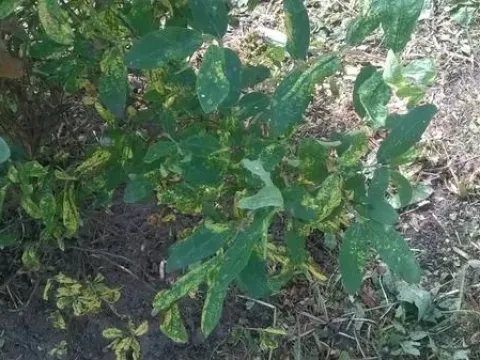
Symptoms of the disease manifest as chlorotic spots, which often form characteristic ring-like patterns or zigzag lines on the leaf blade. In many crops, distinct leaf deformation, reduction in size, and curling are observed, which negatively affects the photosynthetic activity of the plant.
What the section contains
Arabis mosaic virus
In the early stages of infection, affected plants may show stunted growth, appearing dwarfed compared to healthy specimens. In some cases, shortening of internodes is noted on the shoots, giving the plant an abnormally bushy appearance.
During the flowering period, infected plants often exhibit changes in petal coloration, manifesting as color breaking or the appearance of light streaks. The quality and quantity of fruits or berries are noticeably reduced; they become small and deformed.
In perennial woody and shrub crops, the virus causes dieback of shoot tips, known as tip necrosis, as well as a general reduction in winter hardiness. Over time, the plant may completely degrade and die under the influence of secondary infections.
It is important to consider that symptoms can vary greatly depending on the plant cultivar, age of the specimen, and environmental conditions, which complicates visual diagnosis without laboratory analysis.
The causative agent of the disease is the Arabis mosaic virus (ArMV), which belongs to the genus Nepovirus of the family Secoviridae. It is a single-stranded RNA virus with spherical particles.
The virus is distinguished by a wide range of hosts, including both herbaceous ornamental and vegetable plants (strawberries, hops, rhubarb), as well as woody crops such as grapes and raspberries. In nature, the virus affects a wide range of weeds, which serve as reservoirs of infection.
The primary vector for virus transmission in the soil is nematodes of the genus Xiphinema (in particular, X. diversicaudatum). They acquire the virus while feeding on the roots of infected plants and are capable of retaining it in their bodies for a long time.
In addition to nematodes, the virus spreads through infected planting material: cuttings, seedlings, strawberry runners, and rootstocks. Seed transmission is also possible for some plant species, which contributes to the wide geographical spread of the pathogen.
Mechanical transmission of the virus (via garden tools or contact between plants) is less common, but it cannot be completely ruled out, especially during pruning operations.
The spread of the virus is inextricably linked to the activity of soil-borne nematode vectors. The most favorable conditions for their life cycle are moist, loamy soils rich in organic matter.
The temperature regime of the soil plays a key role: optimal values for nematode migration and effective virus transmission are in the range of 15 to 25 degrees Celsius. Under such conditions, infection occurs most intensely.
High population density of nematodes in the plant rhizosphere significantly increases the risk of epiphytotics. The virus is often introduced to new areas along with infected planting material, after which soil-borne pests ensure its rapid spread throughout the plantation.
The presence of reservoir weeds allows the virus to maintain its viability for a long time, even in the absence of the main crop. This creates a permanent source of infection in the area.
Cultivation of areas after infected plants requires special attention, as virus-carrying nematodes can survive in the soil for several years even in the absence of living roots of host plants.
The main damage from the virus lies in a sharp decline in the market quality and productivity of agricultural crops. Infected strawberry or grape plantations lose up to 50-70% of their yield within a few years.
Plants affected by the virus become extremely vulnerable to other diseases and pests. Disruption of physiological processes leads to weakened immunity, making it impossible to obtain stable profit in commercial horticulture.
Long-term persistence of the virus in the soil makes it impossible to cultivate susceptible crops in contaminated areas without conducting expensive soil disinfection measures or a long break in crop rotation.
The spread of the virus through planting material leads to economic losses during quarantine inspections, restrictions on product exports, and the need to dispose of large batches of infected seedlings.
In ornamental horticulture, viral infection makes the sale of plants impossible due to loss of aesthetic value, which deals a direct financial blow to nurseries and flower farms.
The main method of control is the use of healthy, certified planting material obtained through tissue culture methods, which is guaranteed to be virus-free.
Regular soil monitoring for the presence of nematode vectors is necessary before planting high-value crops. In case of high contamination of the area, soil fumigation or the use of a long fallow period with frequent cultivation is recommended to deplete the nematode population.
An important component of prevention is thorough weed control, as weeds can serve as refuges for the virus. Regular weeding around plantations reduces the risk of primary infection.
Upon detection of symptoms, infected plants should be immediately removed along with the root system and disposed of outside the plot to prevent further spread of the pathogen.
- Use of cultivars resistant to nematodes or the virus.
- Adherence to quarantine regulations when importing planting material.
- Disinfection of garden tools after working with suspicious plants.
- Implementation of crop rotation with crops that are not hosts of the virus or nematodes.