
Areca velarivirus
Velarivirus arecae
The causative agent is a virus belonging to the Velarivirus genus within the Closteroviridae family. It is characterized by a single-stranded RNA genome and thread-like viral particles.
What the section contains
Areca velarivirus
This virus primarily infects species of the Arecaceae family. Its classification is based on genomic sequencing, which distinguishes it from other closely related plant viruses affecting palm trees.
The transmission of the virus is mediated by insect vectors, most notably mealybugs (Pseudococcidae), which transmit viral particles during feeding on host plant sap.
Transmission can also occur through infected propagation material, including contaminated seeds or vegetatively propagated palm parts used in commercial nurseries.
The virus establishes a systemic infection by replicating within the cytoplasm of parenchyma cells, leading to long-term physiological changes in the host plant.
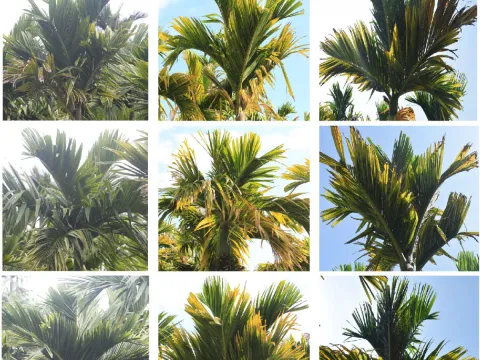
Symptoms typically manifest as pronounced mosaic patterns on the leaves. Chlorotic spots and streaks appear, significantly disrupting the plant's photosynthetic capability.
Deformation of young leaves is a hallmark symptom, often appearing as curling or a notable reduction in the size of the leaf blades compared to healthy counterparts.
Infected palms show signs of general stunted growth and loss of turgor pressure, even when soil moisture and irrigation are maintained at optimal levels.
As the disease progresses, the palm canopy becomes sparse, and older leaves frequently develop necrotic zones, eventually leading to premature senescence and death.
Diagnosis requires laboratory confirmation, usually via polymerase chain reaction (PCR) techniques, to identify specific RNA sequences associated with the virus.
The spread of the virus is highly dependent on the population dynamics of its insect vectors. High humidity and warm temperatures facilitate the rapid proliferation of mealybugs.
Plant density is a critical factor; dense plantings allow for easier transmission, as insect vectors can easily move between adjacent palm specimens.
Poor agricultural practices, such as failing to disinfect pruning tools, are major contributors to the mechanical transmission of the virus within nurseries and collections.
Environmental stress, such as nutrient deficiencies or inadequate irrigation, lowers the natural resistance of palm trees, making them more susceptible to viral invasion.
Seasonal temperature fluctuations also play a role in symptom expression, with active growth periods often revealing more pronounced viral symptoms due to metabolic activity.
The primary danger lies in the systemic nature of the infection, which renders the palm unable to recover, leading to total loss of aesthetic or commercial value.
In commercial nursery settings, this virus results in severe economic losses due to the necessity of culling and destroying entire batches of infected plants.
The virus compromises the overall health of the tree, significantly reducing growth rates and longevity, which is especially detrimental for rare or specimen palm varieties.
Weakened plants are highly prone to secondary infections, including fungal and bacterial pathogens, which rapidly colonize the already stressed palm tissues.
Due to the lack of effective curative antiviral treatments, the virus represents a significant threat to palm diversity and agricultural productivity.
Strict phytosanitary practices are the cornerstone of management. Any plant displaying suspected symptoms must be immediately isolated and destroyed to prevent spreading.
Systematic vector control is essential. Regular applications of insecticides targeted at mealybugs are necessary to reduce the risk of further viral transmission.
Strict tool hygiene is required; all pruning shears and knives must be disinfected with appropriate solutions after every contact with an individual plant.
Procuring certified virus-free planting material is the most reliable strategy for preventing the introduction of this pathogen into new environments.
Optimizing growing conditions and maintaining adequate space between plants improves air circulation and reduces the ability of insect vectors to spread the infection.