
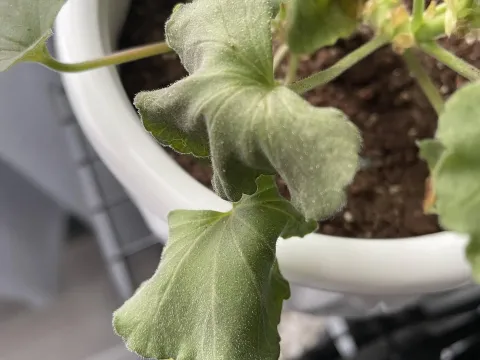
Pelargonium leaf curl virus
Polerovirus pelrcv
The primary symptom of infection is the characteristic inward curling of leaves, which gives the plant a stunted and disheveled appearance. Leaves often become chlorotic, displaying yellowish spots, rings, or mosaic patterns.
What the section contains
Pelargonium leaf curl virus
Infected geranium plants show significant growth retardation, with distorted stems and shortened internodes. Flowering is severely reduced, and buds often deform or drop prematurely, drastically lowering the plant's decorative value.
In some cases, necrosis appears on leaf tissues, which may coalesce over time. The plant loses turgor and looks wilted, regardless of proper watering or maintenance practices.
Visual symptoms vary depending on the pelargonium cultivar and environmental conditions. The virus can sometimes exist in a latent form, where the plant appears healthy while acting as a silent source of infection.
Accurate diagnosis of the viral etiology often requires laboratory testing in professional nurseries. External symptoms can easily be confused with nutrient deficiencies or damage caused by spider mites.
The causative agent is the Pelargonium leaf curl virus (PelLV), a member of the Polerovirus genus. This is a systemic virus that targets the plant's vascular system, disrupting normal metabolic processes and nutrient transport.
The virus is an obligate intracellular parasite. Its particles penetrate plant tissues and hijack cellular machinery to replicate, effectively suppressing the plant's immune response.
Pelargonium leaf curl virus is categorized as a difficult-to-eradicate infection. Once it enters the vascular tissues, it rapidly spreads throughout the entire plant, leading to systemic infection at all developmental stages.
The biology of the virus is closely tied to the activity of insect vectors, which are the primary means of transmission in agricultural settings. Without insects or human intervention, the virus cannot migrate between distant plants.
The high stability of viral particles under environmental stress makes them particularly dangerous in greenhouse conditions. The virus persists in the tissues of mother plants used for vegetative propagation.
The active spread of the virus is directly linked to the life cycles of aphids, which act as the main vectors of the disease. Infestations of these pests in greenhouses frequently trigger outbreaks of the infection.
High planting density in confined spaces is a significant risk factor. Crowding facilitates the rapid movement of insect vectors from infected plants to healthy ones.
The greenhouse temperature regime also influences the speed at which symptoms manifest. Temperatures optimal for geranium growth can facilitate faster viral replication within plant cells.
The use of untested propagation material is the primary route for introducing the virus into new collections. Cuttings taken from externally healthy but latently infected stock plants guarantee the transmission of the virus to the next generation.
Hygiene of pruning and propagation tools is critical. Using the same knife on multiple plants without intermediate disinfection leads to the mechanical transmission of the virus via sap.
The main danger is the complete loss of commercial value for ornamental crops. Infected specimens are no longer suitable for retail or inclusion in landscaping projects.
The virus causes irreversible physiological changes that cannot be cured with chemical pesticides. An infected plant becomes a persistent reservoir of infection, threatening the entire nursery collection.
Reduced photosynthesis and metabolic disruption lead to gradual depletion and eventual death of the plant. Even if the plant survives, it remains weakened and highly susceptible to secondary fungal infections.
Economic damage stems from the need to destroy large quantities of stock. Complete culling of infected plants is the only effective strategy to stop an epidemic.
The presence of the virus in a greenhouse creates risks for other floral crops if they are susceptible to this strain or its vectors. The impact extends to the long-term viability of the production facility.
- Conduct regular monitoring of plant health, focusing on early detection of aphids.
- Completely destroy infected plants along with their soil to prevent further transmission.
- Apply targeted insecticides to manage vector populations within greenhouse environments.
- Thoroughly disinfect gardening tools with alcohol solutions after working with each plant.
- Source only certified virus-free propagation material from reputable suppliers.
A vital preventive measure is the implementation of a strict quarantine period for new acquisitions. Any plant entering the facility should be isolated for 2–4 weeks to monitor for potential hidden symptoms.
Maintaining an optimal balance of soil nutrients is essential. Balanced nutrition strengthens the plant's general immunity, although it does not guarantee protection against systemic viral infection.
Controlling weeds around greenhouse complexes reduces the number of host reservoirs for pests that may carry the virus to cultivated pelargoniums.
Using yellow sticky traps helps in the early detection of winged aphid forms, allowing for intervention before the infection spreads throughout the collection.