
Olive leaf sickle
Olive sickle
Description
Symptoms
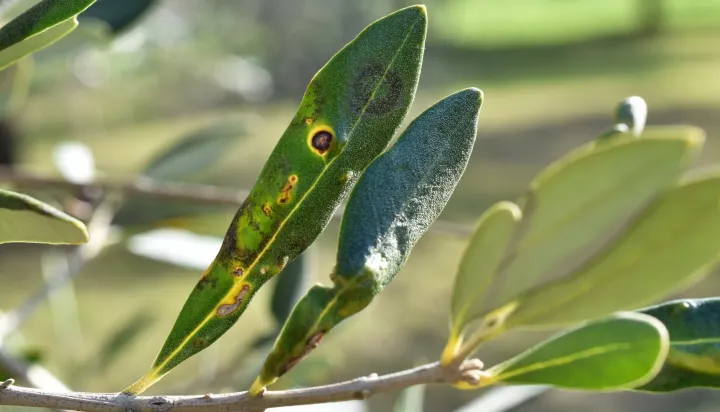
The hallmark sign of the disease is the sickle-like or arched deformation of the leaves, where one side of the lamina grows faster than the other.
Deformed leaves are often twisted or curled, which significantly reduces the effective surface area for photosynthesis and gas exchange.
Chlorotic spots or yellowing may appear on the deformed leaves as the vascular transport system within the leaf becomes disrupted.
Premature leaf drop is frequently observed, which can leave branches bare and significantly reduce the vigor of the affected tree section.
In severe cases, the deformation spreads to the youngest growth, including the apical meristems, stunting the development of new shoots.
Pathogen
Olive leaf sickle refers to a specific pathological condition or symptom typically triggered by fungal infections or severe physiological imbalances in the tree.
This condition commonly affects the Olea europaea species, often observed in both wild groves and intensive commercial olive orchards.
The causative agents are often opportunistic fungi that disrupt the growth hormone balance within the leaf tissue, causing irregular cell elongation.
The disease can be exacerbated by environmental stressors that leave the plant vulnerable to secondary pathogen colonization on the foliage.
Biological studies suggest that the condition often occurs when the plant's natural defense mechanisms are compromised, allowing the pathogen to thrive.
Conditions for development
Development is heavily favored by prolonged periods of high relative humidity combined with mild, stagnant air conditions within the orchard.
Poor orchard ventilation, often caused by improper pruning or excessive tree density, creates a moist microclimate ideal for infection.
Nutritional imbalances, specifically nitrogen excess, result in succulent growth that is much more susceptible to fungal attack and deformation.
Extreme temperature fluctuations weaken the tree's immune system, making it harder for the olive tree to recover from minor pathogen exposure.
The presence of insect pests that damage leaf surfaces provides entry points for fungi, initiating the deformation process on otherwise healthy leaves.
Why it matters
The most significant impact is the drastic reduction in the tree's photosynthetic capacity, which leads to lower yields and poor fruit quality.
Long-term infestation drains the tree of vital energy reserves, making it susceptible to secondary infections like Verticillium wilt or Peacock spot.
The aesthetic and structural integrity of the tree is compromised as the canopy loses density due to chronic leaf fall and stunted growth.
Oil accumulation in the drupes is negatively affected because the tree cannot produce enough carbohydrates to support optimal fruit development.
Significant economic losses occur when large portions of the canopy are affected, necessitating intense recovery measures and production downtime.
Protection
The cornerstone of control is proper canopy management through regular pruning to ensure sunlight penetration and adequate airflow.
Applying copper-based fungicides during the early spring or autumn growth phases helps to protect new foliage from fungal colonization.
A balanced fertilization program, with a focus on potassium and micro-elements, reinforces the leaf cell walls against deformation.
Integrated Pest Management (IPM) strategies to control aphids and scales are essential to prevent secondary fungal infections through leaf wounds.
Sanitation practices, such as removing and burning infected pruning debris, effectively lower the inoculum pressure within the grove for the following season.
Discussion
No discussions yet — be the first.