
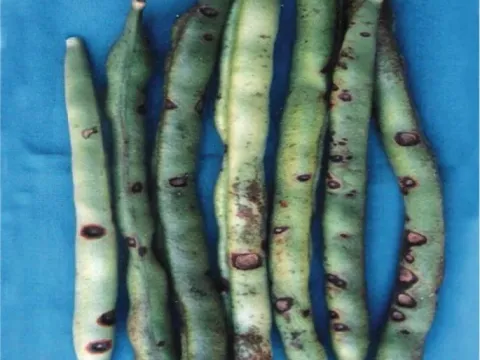
Bean anthracnose
French bean
Bean anthracnose is caused by the fungal pathogen Colletotrichum lindemuthianum. This fungus is known for its ability to persist in soil, crop residues, and infected seeds for several seasons.
What the section contains
Bean anthracnose
The disease primarily attacks common beans, though it can also affect other legumes. The fungus is highly adaptable and exists in various physiological races, making resistance breeding challenging.
The life cycle of the pathogen involves the production of conidia, which are efficiently spread by rain splashes, wind, insects, and human activity during field management practices.
Once the spores land on a host, they penetrate plant tissues directly or through natural openings. The fungus then colonizes the intracellular spaces, causing tissue breakdown and necrotic lesions.
Because the pathogen can colonize the seed coat and inner tissues of the bean, seeds serve as the primary reservoir for long-distance transport and initial field infection.
Early symptoms appear on seedlings as dark, sunken lesions on the cotyledons, which often develop a pinkish mass of fungal spores under humid conditions.
On leaves, the disease manifests as reddish-brown or dark spots that follow the leaf veins. Severe infections cause leaves to crinkle and wither prematurely.
The most diagnostic symptom is found on the pods: distinct, sunken, circular lesions with a dark reddish-brown border that later develop a light-colored or pink spore center.
As the infection deepens, it penetrates the pod wall to infect the seeds within, causing them to develop dark, discolored spots that significantly reduce market quality.
Under persistent wet conditions, the fungal colonies may merge, causing extensive damage to the entire plant structure, eventually leading to plant collapse.
Bean anthracnose thrives in cool to moderate temperatures, typically between 15°C and 25°C, combined with high relative humidity levels, usually exceeding 90%.
Rainy weather is the most critical environmental factor for the rapid spread of the disease, as water splashes move the conidia from the soil to the upper parts of the plants.
Poor field hygiene and dense planting patterns create microclimates with limited air circulation, which are highly conducive to fungal infection and progression.
The presence of moisture on foliage for extended periods is necessary for the germination of fungal spores, making overhead irrigation a potential risk factor.
Warm, dry weather tends to inhibit the development of the fungus, which is why the disease is most severe in regions or seasons with frequent rainfall and mild temperatures.
Anthracnose can result in total crop loss in susceptible varieties during high-pressure years, posing a significant threat to agricultural profitability.
The disease drastically degrades the aesthetic and nutritional quality of the produce, rendering pods and seeds unmarketable for both fresh and processed markets.
Infected seeds often show reduced germination rates and weakened seedling vigor, which leads to sparse plant populations and uneven crop growth in the field.
The systemic damage to the plant's photosynthetic apparatus reduces the overall plant health, causing stunted growth and lower yield components like pod weight and grain fill.
By compromising the integrity of the seed, the disease also reduces the potential for future seed saving and storage, forcing farmers to source new certified seeds.
The primary control measure is the use of disease-free, certified seeds, as the pathogen is largely seed-borne and difficult to eliminate once established.
Implementing a crop rotation cycle of at least 3 years without host legumes helps break the pathogen's life cycle by allowing infected residues in the soil to decompose.
Field sanitation is crucial; removing and destroying crop debris after harvest significantly reduces the amount of inoculum available for the next growing season.
The use of resistant cultivars is the most sustainable and efficient way to mitigate the damage caused by various races of the fungus.
- Application of appropriate fungicides during the vegetative growth stages.
- Ensuring proper row spacing to maximize airflow and minimize leaf wetness.
- Avoiding work in fields when foliage is wet to prevent the spread of spores.