
Barley yellow dwarf
Luteovirus mavhordei
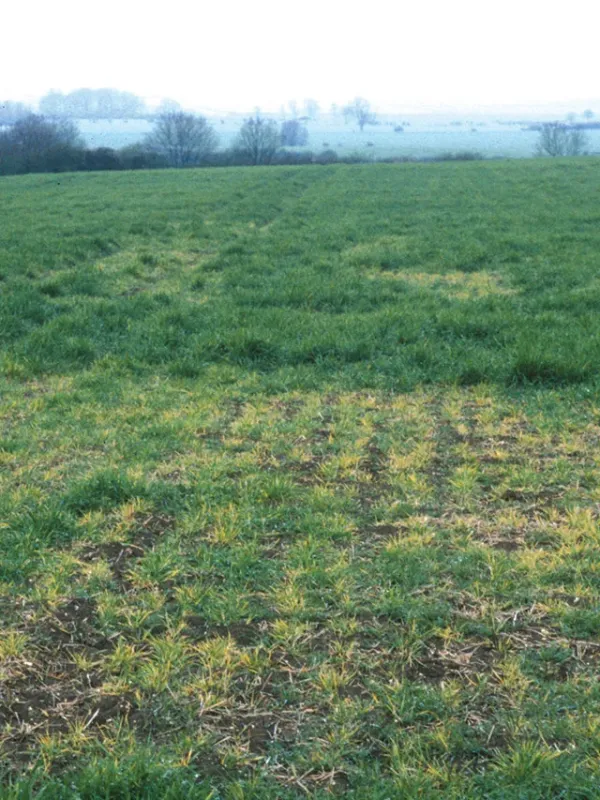
Description
Symptoms
Visible symptoms typically appear 2–4 weeks post-infection. The most characteristic sign is yellowing or reddening of leaf tips, which gradually progresses down the leaf blades.
Infected plants exhibit severe stunting due to shortened internodes. Early-infected crops often show increased tillering, giving the plants a prostrate or "dwarfed" appearance compared to healthy ones.
Root development is significantly impaired, reducing the plant's ability to take up water and nutrients. Consequently, heading is delayed or fails entirely, and heads that do form often remain sterile.
In fields, the disease appears in patches where aphid colonization originally occurred. Over time, these patches can expand and coalesce, making the entire crop appear stunted and discolored.
Because symptoms can mimic nitrogen deficiency or soil-borne root pathogens, confirmation often requires laboratory techniques such as ELISA or PCR to detect the virus specifically.
Pathogen
Barley yellow dwarf virus (BYDV) is the causal agent of one of the most widespread and damaging viral diseases affecting cereal crops globally, belonging to the family Luteoviridae.
The virus is an obligate parasite and cannot be transmitted mechanically through sap, seeds, or soil. It relies entirely on aphid vectors for transmission and preservation in the ecosystem.
More than 20 aphid species serve as vectors, including the bird cherry-oat aphid and the grain aphid. Transmission is persistent, meaning an aphid remains a carrier for its entire life after feeding on an infected plant.
BYDV is phloem-limited, restricting the movement of sugars and nutrients from leaves to the rest of the plant, which results in systemic infection and physiological disruption.
It affects a broad range of hosts including barley, wheat, oats, rye, and many wild grass species, which act as primary reservoirs for the virus during off-seasons.
Conditions for development
The severity of BYDV outbreaks is heavily dependent on aphid population dynamics. Mild autumns and warm winters promote early aphid migration, increasing the risk of infection in winter-sown cereals.
Early sowing of winter cereals often coincides with the peak migration of winged aphids, making emerging seedlings highly susceptible to primary inoculation by the virus.
For spring crops, late planting poses the greatest risk, as seedlings emerge during peak aphid activity, leading to higher levels of infection during the critical early growth stages.
The presence of wild grasses along field margins and roadsides provides an "infection bridge," allowing the virus to persist and transmit to new crops as soon as they emerge.
Environmental factors that favor aphid reproduction, such as moderate temperatures and high humidity, significantly increase the rate of viral spread within the agroecosystem.
Why it matters
Economic damage is substantial, with yield losses ranging from 30% to 70% in high-pressure years. The primary loss is driven by poor grain fill, low test weight, and reduced grain quality.
Infected plants are immunocompromised, making them more susceptible to opportunistic secondary infections, such as fungal root rots and foliar diseases, which further reduce crop vigor.
Since the virus inhibits the translocation of carbohydrates, the plants lack the energy required for proper grain development, leading to shriveled grains and significantly reduced thousand-kernel weight.
Beyond yield loss, the cost of chemical control measures to manage aphid populations adds to the financial burden of farmers, with varying degrees of success in virus prevention.
In extreme cases, high infection rates lead to total crop failure, necessitating reseeding or abandonment of the field, which represents a total loss of input costs.
Protection
The primary control strategy is adjusting sowing dates: delaying winter cereal sowing or planting spring cereals as early as possible to minimize overlap with peak aphid migration periods.
Effective management includes controlling reservoir weeds around fields and non-cropped areas to break the lifecycle of the virus and reduce the initial aphid population.
Insecticide application is effective primarily during the early stages of crop emergence to prevent primary colonization by aphids; however, it is less effective once the virus has been introduced.
Selecting and planting tolerant or resistant cultivars is considered the most sustainable and efficient long-term solution for managing BYDV in endemic regions.
- Use of systemic insecticide seed treatments to protect seedlings during the susceptible phase.
- Monitoring aphid populations using yellow sticky traps to time control measures accurately.
- Implementing crop rotation to disrupt the survival cycle of the vector and the virus.
- Balancing nutrient management to ensure plants can tolerate mild infection levels.
Discussion
No discussions yet — be the first.