
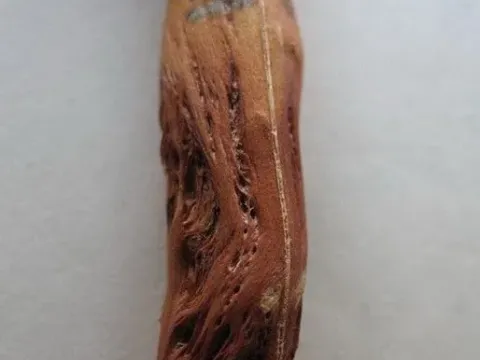
Apple stem pitting
Rubodvirus mali
The causal agent of this disease is the Apple stem pitting virus, officially classified as Rubodvirus mali. It is a systemic plant pathogen that infects the vascular tissue, severely impacting the tree's internal physiology and nutrient transport.
What the section contains
Apple stem pitting
The virus is primarily transmitted through vegetative propagation. Infected scion wood and rootstocks serve as the main vehicles for the spread of the pathogen, often remaining latent for long periods before symptoms appear.
Mechanical transmission is a critical risk factor in commercial orchards. The virus can easily be transferred between trees by contaminated pruning shears, saws, and other grafting tools if proper hygiene protocols are not followed.
There is no evidence of widespread insect vectors for this specific virus, making the movement of infected plant material and contaminated tools the primary concerns for orchard managers and nursery owners.
Because the virus is deep-seated within the plant's vascular cambium, it persists indefinitely, necessitating long-term management strategies rather than curative chemical treatments.
The hallmark symptom of the disease is the development of pits, grooves, and depressions beneath the bark of the trunk and primary scaffold branches. These symptoms become visible when the bark is peeled back to reveal the woody cylinder.
Affected trees often exhibit stunted growth and an open, sparse canopy. Leaves may appear smaller than normal, and in some varieties, show symptoms of chlorosis or premature senescence during the growing season.
As the disease progresses, the bark surface may appear flattened or develop a bumpy texture. The vascular disruption interferes with the flow of water and minerals, leading to the overall physiological decline of the apple tree.
Necrotic tissue found in the pits confirms the impact of the virus on cell division. These damaged areas become focal points for further tissue degradation and reduce the structural integrity of the branches.
In advanced cases, the pitting can cover a large percentage of the trunk circumference, eventually leading to a failure of the nutrient transport system and the gradual dieback of entire branches.
The primary economic harm caused by stem pitting is a significant reduction in fruit yield and fruit quality. Apples from infected trees are frequently undersized, malformed, and exhibit poor marketability.
Infected trees show increased susceptibility to environmental stresses, including winter injury and drought. The weakened vascular system makes the trees more prone to secondary infections by wood-decay fungi and opportunistic bacterial pathogens.
The disease contributes to the early senescence of orchards, forcing growers to remove trees long before their productive lifespan should end. This results in substantial financial losses due to lost production and replanting costs.
The virus compromises the overall health and vigor of the tree, creating a permanent state of stress that inhibits optimal development and fruit production capacity.
The presence of hidden virus carriers in an orchard poses a constant danger to neighboring healthy trees, as pruning activities facilitate the rapid spread of the pathogen throughout the entire block.
The most effective strategy for managing apple stem pitting is the exclusive use of certified, virus-tested planting material. Sourcing trees from reputable nurseries that employ indexing programs is essential to prevent entry into the orchard.
Rigorous sanitation of all pruning and grafting tools is mandatory. Disinfecting blades with ethanol, sodium hypochlorite, or specialized quaternary ammonium solutions after every tree is necessary to interrupt the transmission cycle.
Orchard managers should conduct regular phytosanitary inspections to identify symptomatic trees. Once confirmed, infected trees should be removed and destroyed, including the root system, to eliminate the reservoir of the virus.
Maintain optimal tree vigor through balanced fertilization and proper irrigation to help the trees withstand the physiological stress caused by the viral infection, although this does not cure the disease.
- Use of certified virus-free rootstocks.
- Thermotherapy for heat-treating scion wood.
- Disinfection of pruning tools between trees.
- Complete removal and destruction of infected trees.