
Apple stem grooving virus
Capillovirus mali
Apple stem grooving virus (ASGV) is the causal agent of this disease, classified within the Capillovirus genus of the Betaflexiviridae family. It is a widespread plant virus characterized by its ability to persist latently in many pome fruit cultivars.
What the section contains
Apple stem grooving virus
Transmission occurs primarily through the use of infected propagation material. When infected scion or rootstock is used during grafting, the virus spreads systemically throughout the newly formed tree.
Mechanical transmission via contaminated pruning tools represents another significant pathway for the virus to move within an orchard. The virus can survive on blades and saws, facilitating horizontal spread.
ASGV does not rely on insect vectors like aphids or mites, which makes it distinct from many other orchard viruses. Its long-term survival in host plant tissue ensures it remains a persistent challenge for nurseries.
The virus genome is complex, allowing it to modulate host gene expression. This capability enables the pathogen to colonize the phloem and cambium tissues, leading to the characteristic wood symptoms.
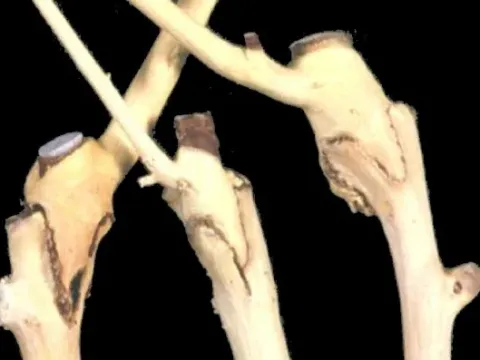
The hallmark symptom of this infection is the formation of deep grooves, furrows, or pits on the woody cylinder beneath the bark. These deformations are often concentrated near the graft union.
Infected trees may exhibit symptoms of overall decline, including stunted growth, short internodes, and poor development of the canopy. The tree may appear smaller than neighboring, healthy trees of the same age.
Foliage symptoms include yellowing, mosaic patterns, or premature leaf drop. These symptoms are often misidentified as nutritional deficiencies, leading to incorrect fertilization strategies by orchardists.
Fruit development is significantly compromised, resulting in undersized, deformed apples. The yield is reduced both in quantity and quality, often making the harvest commercially unviable.
When the bark is stripped from the trunk, the characteristic pits and grooves in the wood are visible. This internal damage interrupts the normal vascular flow, weakening the tree's structural integrity.
The disease causes substantial economic losses by reducing fruit productivity and tree lifespan. Trees infected with ASGV exhibit poor cold hardiness and increased sensitivity to environmental stress.
Chronic infection predisposes trees to secondary infestations by bark beetles and various fungal pathogens. The tree gradually loses its vitality, leading to irreversible decline and premature death.
Reduced fruit quality, including poor color, low sugar content, and irregular shape, impacts the marketability of the produce. This directly affects the profitability of commercial apple orchards.
Nurseries face severe consequences if their stock is contaminated, as entire batches of saplings may need to be discarded. The disease makes it impossible to maintain high-quality certified plant health standards.
Because the disease is systemic and permanent, the infected tree serves as a continuous reservoir for the virus. This poses a threat to any surrounding susceptible varieties within the orchard block.
The primary control strategy is the use of certified virus-free nursery stock. Sourcing plants from nurseries that employ thermotherapy and meristem tip culture is essential for successful orchard establishment.
Implementing strict sanitation protocols during pruning is crucial to prevent mechanical spread. Disinfecting tools with approved antimicrobial solutions between trees significantly reduces the risk of transmission.
Regular visual inspections of the orchard should be performed to detect early symptoms of the disease. Any trees displaying signs of growth stunting or poor performance should be tested for ASGV.
Infected trees must be rogued and removed entirely, including root stumps, to prevent potential root grafting connections. Replacing these trees with certified healthy nursery material is necessary for orchard replenishment.
Integrated orchard management should prioritize biodiversity and genetic resistance. Where available, choosing apple cultivars and rootstocks known to be less susceptible to ASGV can help mitigate the risk.