
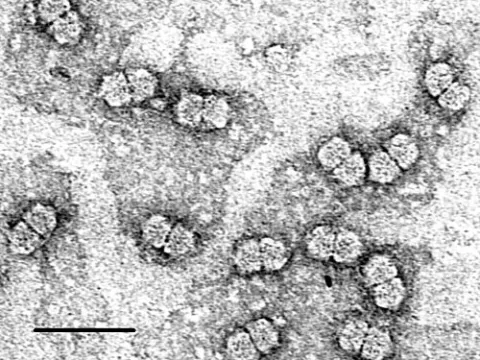
Mastrevirus flavaparvi
Mastrevirus flavaparvi
The causative agent of this disease is the Mastrevirus flavaparvi, a member of the Geminiviridae family. These are plant-pathogenic viruses characterized by a circular single-stranded DNA genome.
What the section contains
Mastrevirus flavaparvi
The disease is classified as a systemic infection, where the virus colonizes the vascular tissues, specifically the phloem, causing significant disruption to the plant's nutrient transport system.
The virus relies entirely on biological vectors, typically leafhoppers, for transmission. It cannot spread by contact or mechanical transmission in the field without the vector's involvement.
Upon entering the host cell, the virus hijacks the plant's nuclear machinery to facilitate its own replication, leading to severe physiological dysfunction within the plant tissues.
Due to its high genetic adaptability, Mastrevirus flavaparvi poses a persistent threat to agricultural stability in regions where environmental conditions favor the vector population.
Typical symptoms include the development of yellow streaks, chlorosis, and mosaic patterns on leaves as a direct consequence of impaired photosynthesis and chlorophyll degradation.
Infected plants display noticeable stunted growth, resulting in significantly smaller biomass compared to healthy specimens in the same environment.
Leaves often exhibit curling, twisting, or other forms of malformation, which are characteristic responses to the hormonal and metabolic disruptions caused by the viral infection.
Flower production is often delayed or significantly reduced. In fruit-bearing crops, the infection leads to poorly developed, misshapen fruits with low commercial value.
- interveinal chlorosis;
- stunted plant height;
- leaf twisting and distortion;
- premature plant senescence.
The prevalence and spread of the disease are strongly linked to the population dynamics of its insect vectors, which thrive in hot, dry climatic conditions.
Weed reservoirs play a crucial role in the disease cycle, as the virus persists in alternative host plants, particularly perennial species, throughout the off-season.
Agricultural practices such as late planting and high plant density increase the risk of rapid secondary spread, providing a continuous bridge for the vectors.
Migration of vectors from surrounding uncultivated areas often leads to primary infection outbreaks at the edges of the fields.
Favorable soil moisture contributes to vigorous weed growth, which in turn supports larger insect populations, increasing the likelihood of pathogen transmission to the crops.
The damage caused by the virus is reflected in severe crop yield losses, often ranging from minor quality issues to total loss of marketability depending on the infection timing.
Quality decline is a major concern, as infected produce is often disqualified for sale due to aesthetic defects, stunted size, or poor nutritional composition.
Infected crops suffer from a weakened immune system, becoming highly susceptible to secondary pests and various opportunistic fungal and bacterial pathogens.
The presence of the virus in a growing area necessitates strict phytosanitary measures and limits the choice of future crops to be planted in the rotation.
Economic impact includes both direct losses in volume and the substantial investment required for intensive pest control programs to manage the vector population.
The primary control measure involves the systematic removal of weeds and alternative hosts in and around the field to eliminate the virus's environmental reservoirs.
Effective management of insect vectors through targeted insecticide applications is essential to break the transmission cycle, especially during the early stages of plant growth.
Utilizing resistant or tolerant cultivars developed through breeding programs is the most sustainable and efficient strategy for mitigating the impact of the disease.
Cultural practices, including proper spatial isolation and adhering to recommended planting schedules, help to minimize the window of opportunity for vector colonization.
Routine scouting and monitoring allow for early detection, enabling farmers to perform rogueing of individual symptomatic plants before the infection becomes widespread.