
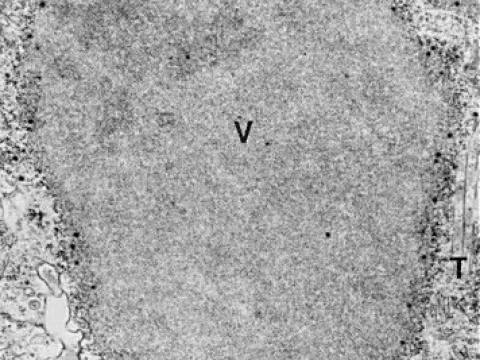
Marafivirus avenae
Marafivirus avenae
The causal agent of the disease is Marafivirus avenae, a virus belonging to the genus Marafivirus. It is characterized by a linear, single-stranded RNA genome and is known to infect various monocotyledonous plants, particularly oats.
What the section contains
Marafivirus avenae
The virus acts as a systemic pathogen, primarily localizing in the phloem tissues. By infecting these tissues, it disrupts the translocation of photosynthates, thereby starving the developing parts of the plant, such as the roots and the grain heads.
In the natural ecosystem, the transmission of Marafivirus avenae is mediated by insect vectors. Leafhoppers are the primary agents, acquiring the virus during feeding on infected plants and transmitting it to healthy individuals through subsequent feeding.
Once the viral particles are introduced into the host plant, they initiate rapid replication within the cytoplasm. The systemic nature of the infection allows the virus to travel throughout the vascular system, leading to a generalized state of infection in the plant.
Biological studies highlight that the virus can persist in perennial weed grasses, which act as asymptomatic reservoirs. These reservoirs allow the virus to survive throughout the winter and provide a source of inoculum for the next crop season.
The clinical symptoms of Marafivirus avenae infection typically manifest as chlorotic streaks or stripes on the leaf blades. Over time, these areas may turn pale or yellow, indicating a significant reduction in photosynthetic capacity.
Infected oat plants often exhibit pronounced growth retardation and stunting. This dwarfing is usually visible at the early stages of development, making the infected patches of the field stand out against healthier crops.
Tillering is noticeably suppressed in infected plants, leading to a thinner crop stand. The stems may appear distorted, which can negatively impact the mechanical stability of the plant and increase susceptibility to lodging.
Generative development is severely impaired: the panicles of infected oats are often underdeveloped and may remain trapped within the sheaths of the upper leaves, leading to poor grain development and uneven maturation.
- Chlorotic striping and leaf yellowing.
- Significant stunting and dwarfism.
- Reduced tillering and thinner plant stands.
- Panicle distortion and incomplete emergence.
- Production of shriveled, low-viability grain.
The spread of Marafivirus avenae is tightly coupled with the population dynamics of its insect vectors. Warm and dry weather conditions favor the reproduction and activity of leafhoppers, thereby increasing the risk of virus dissemination.
The proximity of wild grassy weeds to oat fields acts as a catalyst for infection. These plants provide a constant source of the virus, especially in early spring when insect vectors start their migration.
Early sowing dates for oats in regions with high vector populations often correlate with higher infection rates. Younger plants are more vulnerable to severe damage if infected during the early vegetative stages.
Poor field hygiene, such as the failure to clear volunteer oats or grassy weeds after harvest, creates a bridge for the virus to survive. This buildup of inoculum ensures high disease pressure for subsequent plantings.
Large-scale climatic patterns that influence the migration timing of leafhoppers play a critical role in the epidemiology of the disease. Years with long, dry autumns can lead to higher viral survival rates in vector populations.
The economic impact of Marafivirus avenae is characterized by substantial reductions in grain yield. Because the virus interferes with essential physiological processes, the plants cannot fill their grain adequately, resulting in lower harvest weight.
Grain quality is severely compromised. Harvested seeds often show poor physical characteristics, including low test weight, reduced germination rates, and poor vigor, making them unsuitable for commercial sale or future planting.
In cases of early-season infection, total sterility of the panicle can occur. This leads to complete yield loss in the affected plants, which can be devastating if the infection occurs early in the crop development cycle.
Infected crops show decreased resilience to environmental stressors, including drought and secondary fungal infections. This compounding effect significantly increases the probability of crop failure in sub-optimal growing conditions.
Farmers face not only direct yield loss but also increased management costs. Expenses related to vector monitoring and the application of insecticidal control measures add to the total production cost per hectare.
The primary strategy for managing Marafivirus avenae is the utilization of resistant or tolerant oat cultivars. Breeding programs focus on creating varieties that can sustain viral infection without significant yield penalties.
Control of insect vectors is crucial, especially during the early growth stages of the crop. Timely application of insecticides can suppress vector populations and significantly reduce the rate of virus transmission.
Effective weed management, both within the field and in boundary areas, is essential to remove reservoirs of the virus. Maintaining clean field edges reduces the probability of vector-mediated primary infection.
Crop rotation practices should be implemented to prevent the buildup of local virus strains. Rotating oats with non-host crops disrupts the cycle of infection and prevents long-term viral accumulation in the field.
Regular phytosanitary monitoring is recommended for early detection of disease outbreaks. If localized infection is identified, rapid intervention or isolation of the area can prevent the epidemic from spreading across the entire field.