
Mastrevirus yellows
Mastrevirus flavi
The disease is caused by viruses belonging to the genus Mastrevirus, within the family Geminiviridae. These viruses are characterized by a small, single-stranded circular DNA genome enclosed in twin icosahedral capsids.
What the section contains
Mastrevirus yellows
Mastreviruses exhibit high specificity to their insect vectors, primarily leafhoppers. The virus is transmitted in a circulative, non-propagative manner, meaning it persists in the vector for its entire life but does not multiply within the insect.
The virus replicates within the nuclei of host plant cells. By hijacking the plant's metabolic machinery, the virus disrupts normal development and triggers the systemic disease symptoms observed in the field.
Transmission occurs when leafhoppers feed on infected plant sap, acquiring the viral particles, which are then injected into healthy plants during subsequent feeding sessions.
The genetic diversity of these viruses allows them to evolve rapidly, which complicates the development of resistant crop varieties and requires ongoing monitoring of circulating viral strains.
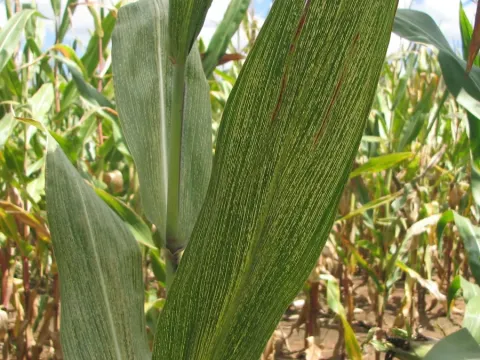
The primary symptom of the disease is the appearance of chlorotic streaks or stripes that run parallel to the leaf veins. As the infection progresses, these areas may turn yellow or even whitish.
Infected plants exhibit severe stunting, characterized by shorter internodes and a reduction in overall height. The plant often appears bushy due to an abnormal proliferation of lateral shoots.
Photosynthetic efficiency is drastically reduced as chlorotic areas lack functional chlorophyll. This metabolic impairment leads to the premature yellowing and eventual necrosis of leaves.
Reproductive organs are significantly affected, resulting in smaller, underdeveloped ears or panicles. Seed set is often poor, with grain being shriveled and of low quality.
Symptoms may vary depending on the age of the plant at the time of infection. Early-stage infections are the most damaging, often leading to complete failure of the plant to produce a viable yield.
Disease outbreaks are heavily dependent on the population dynamics of the leafhopper vector. Warm and dry weather patterns typically favor the rapid reproduction and migration of these insect populations.
The presence of perennial grasses and weeds acts as a reservoir for the virus during the off-season. These plants maintain the viral population until favorable conditions allow for transmission to cash crops.
Planting dates play a significant role in disease severity. Crops that are in the seedling stage during peak insect migration periods are at the highest risk of systemic infection.
Local microclimates within dense canopy cover can create favorable conditions for vector colonization. Field edges adjacent to uncultivated land are often the first to show signs of infestation.
Stress factors such as drought or nutrient deficiencies can weaken plant defenses, making them more susceptible to viral invasion and exacerbating the visible symptoms of the disease.
The economic impact of the virus is measured by significant yield losses, which can range from minor reductions to total crop failure depending on the timing and extent of the infestation.
Quality parameters of the harvested grain, such as protein content and seed weight, are negatively impacted. This leads to a decrease in market value and potential rejection by processors.
Viral infection leaves plants more susceptible to secondary stressors, including root rot and other fungal pathogens that exploit the plant's weakened immune system.
Managing the disease requires additional investment in chemical pesticides to control vectors, which increases production costs and may have environmental implications.
The persistence of the virus in the environment means that once an area is infected, long-term rotation strategies must be employed to reduce the inoculum level for future seasons.
Integrated Pest Management (IPM) is essential for controlling Mastrevirus. This includes cultural practices that remove the environmental sources of the virus, such as clearing weeds from field margins.
Chemical control focuses on managing leafhopper populations through timely insecticide applications. Monitoring programs should be used to determine the threshold for treatment before viral transmission occurs.
The use of certified, virus-free seeds and planting resistant crop varieties are the most effective long-term strategies for preventing the spread of the disease.
- Field margin sanitation to remove weed hosts
- Monitoring leafhopper population thresholds
- Application of systemic insecticides
- Use of resistant or tolerant crop varieties
- Implementation of crop rotation cycles
Spatial isolation between new plantings and older, potentially infected crops helps reduce the incidence of primary infection and helps maintain field productivity across the season.