
Maple mite-borne mosaic virus
Emaravirus aceris
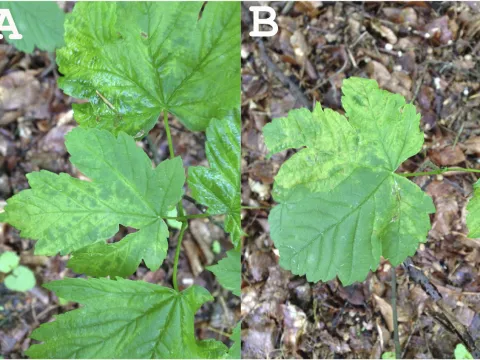
The primary symptom of this disease is the appearance of chlorotic spots and mottling on the maple leaf blades. These spots are often irregular in shape and may gradually coalesce, creating large yellowed or pale areas on the foliage.
What the section contains
Maple mite-borne mosaic virus
In affected areas, the leaf tissue may become thinner, and in some cases, slight leaf curling or deformation occurs. These visual symptoms typically appear early in the growing season shortly after bud burst.
As the disease progresses, necrosis may develop on the leaves, leading to premature drying and shedding of the foliage by mid-summer. This disease is characterized by a chronic nature, often persisting on the same tree year after year.
Visual signs may vary depending on the maple species and the severity of the infection. It is important to distinguish this viral mottling from fungal infections, as viral spots lack the spore-bearing signs common in fungi.
Severely affected trees exhibit general decline, reduced shoot growth, and a significant loss of overall crown aesthetics and vitality.
The causative agent of the disease is the Emaravirus aceris virus, which belongs to the Emaravirus genus. This pathogen has a complex biological interaction with its woody host plant.
The primary vector of the virus in nature is the eriophyid mite Aceria aceris, which inhabits the buds and leaves of maple trees. Mites actively transmit viral particles while feeding on the tree's sap.
The virus localizes within the plant's vascular system and spreads systematically throughout its tissues. Transmission occurs through mite movement within the crown or their migration to neighboring plants.
The disease is chronic because the virus resides in the tree's perennial tissues, including dormant buds and woody stems. This persistence makes complete eradication of the pathogen extremely difficult once infection is established.
Laboratory diagnosis of the virus requires specific molecular techniques, such as PCR, as symptoms can be easily confused with abiotic chlorosis or nutrient deficiencies.
Disease development is directly linked to the life cycle of the mite vector. Warm and humid springs promote active mite reproduction, which significantly accelerates the rate of viral spread throughout the planting.
Infection pressure increases in overcrowded plantings where air circulation is restricted, creating a favorable microclimate for eriophyid mites. Weakened trees are significantly more susceptible to primary infection.
Introduction of the virus into new areas most often occurs via infested nursery stock where mite control measures have not been strictly implemented.
Optimal conditions for virus survival are provided by viable maple buds during the winter season, where both the virus and its vector overwinter successfully.
Secondary spread within an area is intensified during periods of vigorous shoot growth, when mites migrate from old infested buds to newly developing leaves.
The main damage is the substantial reduction in the decorative quality of maple trees, which is critical for urban landscapes and park management. Affected trees lose their characteristic color and health.
Viral infection disrupts photosynthesis by damaging chlorophyll in the mottled zones. This reduces the tree's overall energy budget and its ability to store necessary nutrients for winter survival.
Chronic infection suppresses the tree's immune system, making it more vulnerable to opportunistic fungal pathogens and various environmental stressors.
Long-term infection can lead to crown degradation, including the dieback of small twigs and the eventual drying out of the entire upper canopy.
Economic losses include costs for treating infected specimens, loss of landscape value, and the necessity of removing and replacing severely damaged trees.
The primary control strategy focuses on preventing the colonization of trees by mite vectors. Regular application of acaricides during the period of mite emergence from buds helps lower the viral pressure.
Using healthy, certified planting material is the foundation of effective prevention. Purchasing saplings from reputable nurseries is essential to avoid introducing the virus to new sites.
Regular sanitation, including the removal of heavily infested branches, helps decrease the concentration of the infection. Removed plant material should be destroyed by burning.
Maintaining high cultural standards—such as proper irrigation, balanced fertilization, and pest management—promotes the maple's natural resilience to viral pathogens.
If symptoms are detected in nurseries, strict culling and quarantine measures must be implemented to prevent the spread of Emaravirus aceris to healthy seedlings.