
Mastrevirus dilatati
Mastrevirus dilatati
Mastrevirus dilatati is a viral pathogen classified within the genus Mastrevirus of the Geminiviridae family. It features a single-stranded circular DNA genome.
What the section contains
Mastrevirus dilatati
The virus is an obligate parasite, requiring a specific insect vector for transmission, as it cannot spread independently under field conditions.
Phylogenetically, it is closely related to other mastreviruses that primarily infect monocotyledonous crops, causing significant systemic issues.
Transmission occurs through leafhopper feeding, where the virus is ingested from an infected host and subsequently transferred to a healthy plant during feeding.
Once inside the plant, the virus replicates within the phloem cells, leading to systemic circulation throughout the entire plant organism.
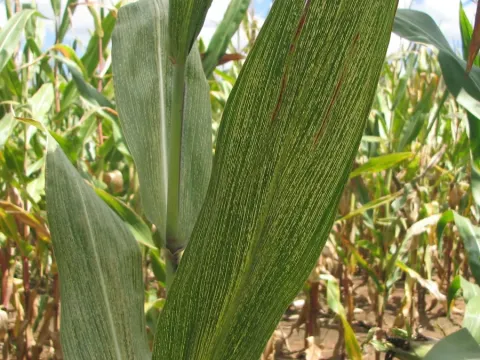
Typical symptoms of infection include characteristic chlorotic streaks along the veins, which significantly interfere with plant physiological functions.
Infected plants exhibit severe stunting and reduced biomass, making them noticeably shorter and weaker compared to healthy crops.
Leaf morphology is often altered, showing curling, distortion, and atypical branching that disrupts the plant's structural development.
In the reproductive phase, plants fail to develop full spikes, resulting in poor grain set and overall low yield potential.
The progression of symptoms is systemic, starting from older leaves and eventually affecting the entire canopy as the virus spreads through the vascular system.
The spread of the virus is directly linked to the life cycle and migration patterns of its insect vectors, which are the primary drivers of epidemics.
Optimal environmental conditions, including moderate temperatures and high humidity, favor the proliferation of leafhoppers, thereby increasing infection rates.
Wild grasses and perennial weeds in surrounding field margins serve as crucial reservoirs, sustaining the virus when primary crops are not present.
Inadequate crop rotation and the presence of crop residue or regrowth (volunteer plants) provide a continuous source of inoculum for new seedlings.
Dry periods often trigger the migration of vectors from wild hosts into cultivated fields, leading to localized clusters of high infection severity.
The economic impact of the virus is primarily seen in substantial yield reductions, as plants lose their capacity to produce high-quality grain.
When infection occurs during early growth stages, the developmental damage is often irreversible, frequently leading to total crop failure on affected areas.
Increased susceptibility to secondary opportunistic infections by bacteria and fungi further complicates the health of the stressed plants.
The physiological stress caused by the virus reduces the plant's overall resilience, making it less adaptable to abiotic factors like drought or nutrient deficiency.
Managing the cumulative damage requires significant investment in preventative inputs, adding to the overall cost of crop production.
Effective management focuses on suppressing vector populations through integrated pest management and the strategic use of systemic insecticides.
Agronomic practices, such as maintaining proper isolation distances and eliminating weeds near field boundaries, are essential for reducing primary infection sources.
Prioritizing the use of certified, resistant crop varieties provides the most durable long-term defense against viral outbreaks.
- Regular scouting for insect vectors to determine economic thresholds.
- Destruction of crop residues to eliminate the virus's overwintering sites.
- Strategic planting times to avoid peak vector activity periods.
Integrated programs that combine chemical control with field sanitation remain the most reliable way to mitigate the spread of the virus in commercial agriculture.