
Grapevine fleck virus
Maculavirus vitis
The causative agent of the disease is the Grapevine fleck virus (GFkV), which belongs to the genus Maculavirus, family Tymoviridae. It is an RNA-based virus that specifically infects plants of the Vitis genus.
What the section contains
Grapevine fleck virus
The virus possesses icosahedral particles, a hallmark of the Tymoviridae family, which allows it to remain stable within the vascular tissues of the grape vine.
It is characterized as a systemic infection, meaning the virus colonizes the entire plant, making it difficult to eradicate once it has established itself in the rootstock and scion.
The transmission of this pathogen is primarily associated with the propagation of infected plant material, including grafts, cuttings, and rootstocks.
Currently, no specific insect vectors have been identified for this virus, which confirms that human activity and nursery management are the key factors in its transmission.
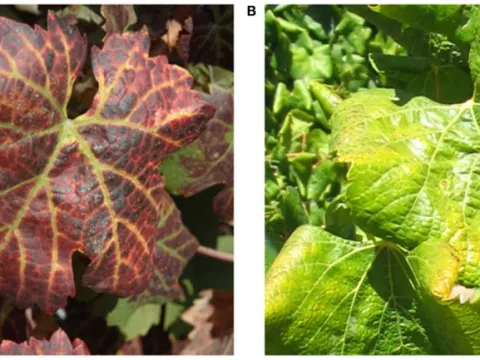
The primary symptom is the appearance of small, translucent spots along the veins of leaves, often described as "flecks" or a mottled appearance on the leaf blade.
Symptoms are most visible on young leaves during the early stages of the growing season, particularly when plants are exposed to fluctuating temperatures.
As the season progresses and ambient temperatures rise, these symptoms tend to fade or become completely masked, which complicates visual inspection in mid-summer.
Infection often leads to a reduction in the overall vigor of the grapevine, manifesting in decreased shoot growth and smaller leaf area development.
In highly sensitive cultivars, the virus may cause leaf deformation and premature yellowing or senescence at the end of the growing cycle.
The development of symptoms is highly dependent on physiological and environmental triggers, as the virus itself can remain latent for extended periods.
Cool weather during the spring months is known to enhance the expression of symptoms, allowing for easier detection in nursery and production settings.
The spread of the virus is largely facilitated by the movement of infected plant material, especially when nurseries lack rigorous certification standards.
Poor agronomic practices that stress the vine can lead to higher viral titers within the plant tissues, exacerbating the overall decline of the vineyard.
Global viticulture trade without stringent testing protocols has allowed the virus to establish presence in most major grape-growing regions worldwide.
The economic impact of GFkV stems from reduced overall vine health and a gradual decline in productivity over the lifespan of the vineyard.
Infected vines often exhibit poor winter hardiness, which can lead to increased mortality during frost events or harsh winter conditions.
Yield quality is compromised as the virus affects the vine's metabolism, leading to smaller berries, lower sugar content, and altered grape composition.
Chronic infection forces growers to accelerate replanting schedules, significantly increasing operational costs and reducing the return on investment.
The inability to produce consistent, high-quality fruit makes infected blocks unsuitable for premium wine production, affecting the commercial value of the crop.
The cornerstone of control is the exclusive use of certified virus-free propagation material obtained from verified, indexed source blocks.
Regular diagnostic screening using PCR (Polymerase Chain Reaction) or ELISA (Enzyme-Linked Immunosorbent Assay) is essential for maintaining a healthy nursery stock.
Thermotherapy is an effective technique where dormant cuttings are subjected to high temperatures to neutralize the virus, allowing for the recovery of valuable cultivars.
Any vine identified as infected must be immediately rogued and removed from the vineyard to prevent the accidental use of its cuttings for further propagation.
- Strict nursery certification and indexing programs.
- Sanitization of all grafting and pruning tools.
- Quarantine and testing of all introduced germplasm.