
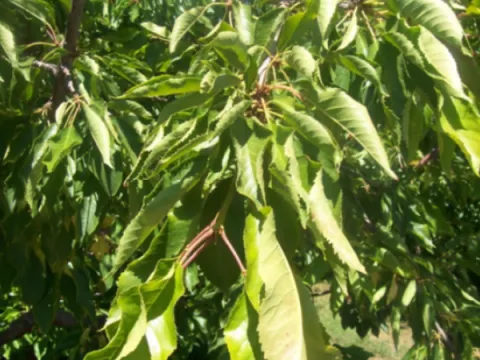
Grapevine fanleaf virus
Nepovirus deformationis
The causative agent of this disease is the Grapevine fanleaf virus (GFLV), a member of the Nepovirus genus. It is a severe pathogen that systemically infects the vascular tissues of grapevines.
What the section contains
Grapevine fanleaf virus
The virus particles are spherical and contain single-stranded RNA. Once inside the plant, it travels through the phloem, infecting the entire vine, including shoots, leaves, and the root system.
The primary reservoir for the virus is infected planting material. The pathogen resides in the plant tissues indefinitely, gradually compromising the health and productivity of the vine.
Transmission occurs naturally via soil-inhabiting nematodes of the genus Xiphinema (specifically X. index). These nematodes feed on infected roots and transmit the virus to healthy plants.
Human activity is another vector: the virus spreads through contaminated tools used for grafting, pruning, and other viticultural practices if not properly sanitized.
The most distinctive symptom is the shortening of internodes, causing shoots to grow in a zigzag pattern. Excessive branching and the formation of double nodes are also common signs.
Leaves become severely deformed, showing asymmetrical growth and deep, fan-like serrations. Chlorotic patterns, such as yellow mosaic or veins banding, often appear on the foliage.
Flower clusters suffer from significant deformity, leading to heavy blossom drop. The resulting grape bunches have berries of unequal size, many of which remain small and green (coulure and millerandage).
Root system development is severely hampered, leading to a general decline in the vigor of the vine. Over time, the plant loses its vitality and becomes unproductive.
- Zigzag shoot growth pattern
- Fan-shaped leaf deformity
- Significant flower and fruit drop
- Uneven berry size within bunches
- General stunted plant growth
Disease spread is closely linked to the presence and activity of nematode vectors. Moist, well-aerated soils provide the ideal environment for these nematodes to thrive and migrate.
Soil temperature significantly influences nematode feeding behavior, which directly affects the speed and success rate of virus transmission between grapevines.
The introduction of infected nursery stock into a new area is the most common cause of primary outbreaks, as the virus can remain hidden in dormant cuttings.
Long-term monoculture of susceptible grape varieties in regions where the virus is already established contributes to a high soil-borne inoculum level over time.
Lack of appropriate fallow periods or the absence of nematode-resistant rootstocks allows the virus to persist and spread efficiently throughout the vineyard block.
The disease causes infectious degeneration, leading to a severe reduction in yield. Losses in grape production can reach up to 80% in heavily infected blocks.
Fruit quality is significantly degraded, with imbalanced sugar and acid levels, making the crop unsuitable for high-quality wine production.
Infected vines exhibit poor winter hardiness and increased susceptibility to other environmental stressors, frequently leading to vine death and vineyard abandonment.
Economic damage is substantial, as there is no cure for infected vines, requiring the removal of the entire vineyard and costly replanting processes.
The virus compromises the plant's ability to produce healthy propagation material, effectively forcing the removal of the specific clone or variety from production.
The primary control strategy is the exclusive use of virus-free, certified nursery stock obtained through tissue culture or heat therapy programs.
Pre-planting soil analysis to detect the presence of Xiphinema nematodes is essential to determine if nematode management is required before establishing a vineyard.
If an infection is detected, affected vines must be rogued (removed along with their entire root system) and destroyed immediately to prevent the virus from spreading.
Rigorous sanitation of all pruning and grafting tools is mandatory. Disinfecting equipment between vines prevents the mechanical transmission of the virus.
Implementing a fallow period for soil treatment and the use of resistant rootstocks are effective long-term measures for managing nematode populations in the vineyard.