
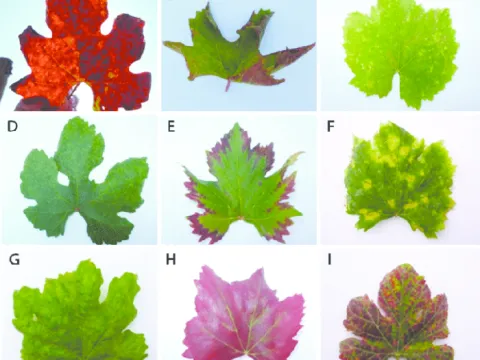
Grapevine leafroll disease
Ampelovirus univitis
Grapevine leafroll disease is caused by a complex of viruses within the family Closteroviridae, primarily associated with the genus Ampelovirus. It is a persistent, systemic disease that infects the phloem tissues of grapevines.
What the section contains
Grapevine leafroll disease
The virus impairs the phloem function, effectively blocking the transport of carbohydrates produced in the leaves to the rest of the plant, including roots and developing grape clusters.
The disease is primarily spread through the propagation of infected scion wood and rootstocks. Once a vine is infected, the virus spreads systemically through all parts of the plant.
In vineyards, the virus is secondarily transmitted by insect vectors, specifically mealybugs (Pseudococcidae) and soft scale insects, which acquire the virus while feeding on infected sap.
As a viral infection, there is no curative treatment available. The pathogen integrates its cycle into the host plant's life, making prevention the only viable management strategy.
Symptoms typically become visible in late summer or autumn as the vine enters the senescence phase. The most distinctive sign is the downward curling of the leaves.
In red-fruited cultivars, the leaves exhibit a characteristic reddening or purplish discoloration while the major veins remain distinctly green, providing a stark color contrast.
White-fruited cultivars show different symptoms; their leaves turn chlorotic, appearing pale yellow or translucent, yet they also display the typical leaf curling and brittleness.
Infected vines often exhibit reduced vigor, shortened internodes, and stunted shoots. The overall growth of the vine is significantly compromised compared to healthy plants.
- Downward curling of the leaf margins;
- Reddening of foliage in red varieties;
- Chlorosis (yellowing) in white varieties;
- Green veins against a discolored leaf blade;
- Uneven grape ripening and reduced berry size.
The spread of the disease is highly dependent on the population dynamics of its insect vectors. Warm, humid climates encourage the proliferation of mealybugs and scale insects.
High-density planting facilitates the movement of these insect vectors between vines. When canopies overlap, it is easier for pests to transition from an infected vine to a healthy one.
Agricultural mismanagement, such as failing to control weed populations that harbor vectors, significantly increases the risk of viral spread throughout the vineyard.
Mechanical transmission is possible if contaminated pruning tools are used. Although less significant than insect transmission, it remains a risk factor in poorly managed vineyards.
Environmental stress can mask symptoms, but the virus remains active within the plant, continuing to weaken the vine and negatively affecting its physiological development.
Grapevine leafroll is considered one of the most economically damaging viral diseases in viticulture, causing massive losses in yield and quality for wine production.
Due to the reduction in sugar accumulation and disrupted ripening, the fruit is often characterized by lower brix levels, poor color, and altered flavor profiles, rendering it useless for premium wines.
The disease systemically weakens the vine, reducing its cold hardiness. Infected plants are much more susceptible to winter damage and early mortality compared to healthy grapevines.
Chronic infection results in shortened vineyard lifespan, forcing growers to undergo premature replanting, which involves high capital expenditures and lost production years.
The disease is highly contagious within a plot; if left unmanaged, it can rapidly infect almost the entire vineyard block, leading to complete degradation of productivity.
The most important control measure is the use of certified virus-tested, clean planting material for all new vineyard developments. This is the foundation of disease prevention.
Growers should maintain an integrated pest management program to monitor and control insect vectors like mealybugs throughout the growing season.
Rogueing is essential: infected vines should be identified, removed, and destroyed promptly to prevent the spread of the virus to adjacent, healthy vines.
Sanitation of tools is crucial. All pruning and canopy management tools must be disinfected between rows or vines to prevent mechanical transmission of the virus.
Regular monitoring and documentation of virus symptoms allow for timely removal of sources of inoculum, keeping the overall disease pressure manageable in existing vineyards.