
Grapevine leafroll disease
Grablovirus vitis
Grapevine leafroll disease is caused by a complex of viruses within the family Closteroviridae, primarily the genus Ampelovirus.
What the section contains
Grapevine leafroll disease
These viruses are phloem-limited, meaning they disrupt the transport of carbohydrates, which are essential for vine growth and fruit development.
The infection is systemic, spreading throughout the woody parts of the vine including roots, trunks, and canes.
The most common method of transmission is through grafting with infected propagation material, such as cuttings or scions.
Mealybugs and scale insects act as the primary vectors, transferring the virus from infected vines to healthy plants while feeding.
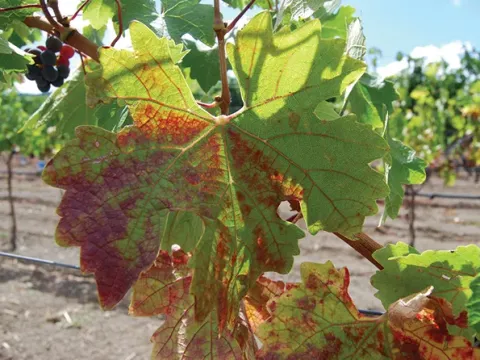
The most distinctive symptom is the downward rolling of leaf margins, which typically occurs later in the growing season.
In red grape varieties, leaves develop a bright red or purple discoloration while the veins remain distinctively green.
White grape varieties show a yellowing of the leaf blades, often described as chlorosis, which can be easily confused with nutritional deficiencies.
Symptoms generally progress from the basal leaves upward toward the canopy of the vine as the season advances.
The texture of affected leaves often becomes thick and leathery compared to the soft, flexible texture of healthy foliage.
The disease is heavily spread by the use of non-certified or untested nursery stock during the establishment of a vineyard.
Warm and humid environments promote the proliferation of mealybug populations, which increases the rate of viral spread.
Mechanical transmission through pruning equipment is a significant risk factor if tools are not properly sanitized between vines.
The persistence of the virus in the vine's perennial tissues ensures that once a plant is infected, it remains a reservoir for life.
Vineyards located near neglected or wild vines face a higher risk of infestation by vectors carrying the virus.
The disease causes a substantial reduction in sugar accumulation in berries, directly impacting the quality of the final wine product.
Yield losses are significant, as berries remain small, mature unevenly, and have lower acidity levels than healthy fruit.
Infected vines exhibit reduced vigor, poor wood maturation, and increased susceptibility to winter damage and secondary pests.
Over time, the cumulative stress on the plant leads to the decline and premature death of entire vineyard blocks.
The economic impact involves the costs of vineyard removal and replanting, making this one of the most destructive diseases in viticulture.
The most effective strategy is the exclusive use of certified virus-tested planting material from reputable nurseries.
Vigorous control of mealybug and scale insect populations is necessary to limit the natural spread of the virus within the vineyard.
Strict sanitation protocols must be followed, including the sterilization of pruning tools with alcohol or appropriate disinfectants.
Early identification and roguing (removal and destruction) of symptomatic vines is critical to slowing the spread of the infection.
- Monitoring for early symptoms throughout the growing season.
- Regular application of systemic insecticides to control vector populations.
- Establishing buffer zones between infected and healthy blocks.
- Proper vineyard management to reduce pest nesting sites.