
Kitaviridae
Kitaviridae
The family Kitaviridae consists of viruses characterized by a positive-sense single-stranded RNA genome. These plant pathogens are known for their specific interaction with host plant tissues, often causing systemic infection throughout the entire organism.
What the section contains
Kitaviridae
The disease type is systemic, meaning the virus replicates and moves through the vascular tissues, affecting the overall physiological integrity of the plant. This viral activity disrupts normal protein synthesis and enzymatic pathways.
Transmission occurs primarily through biological vectors such as mites. These vectors feed on infected plants, acquire the virus, and then transmit it to healthy plants during subsequent feeding events, facilitating rapid spread within a crop.
The biology of Kitaviridae involves complex interactions with their insect vectors, which may carry the virus for extended periods. This efficiency makes even small vector populations a significant risk to the health of the entire field.
Research suggests that these viruses adapt well to various environmental conditions, enabling them to infect a wide range of host plants, including both ornamental and food crops, which poses a constant challenge to agricultural production.
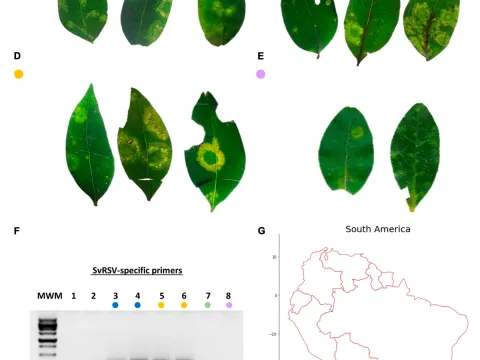
Common symptoms associated with Kitaviridae infection include chlorosis, often manifested as yellow mosaic patterns on leaves. These patterns result from the impairment of the plant's ability to photosynthesize effectively.
Leaf deformation is a hallmark sign of infection. Infected leaves often become stunted, wrinkled, or curled, and the overall plant structure becomes visibly distorted, which negatively impacts the aesthetic and commercial value.
Stunting or dwarfism is another prevalent observation, where infected plants fail to reach their full size compared to healthy specimens in the same environment. This affects the overall vigor and productivity of the crop.
In terms of reproductive health, infected plants may show reduced flowering or abnormal fruit development. Fruits are often misshapen, discolored, or show necrotic spotting, making them unsuitable for market distribution.
Progressive stages of the disease can lead to localized necrosis. If the infection remains unmanaged, the plant’s defenses weaken, eventually leading to senescence and potential loss of individual plants or entire crop rows.
The development and spread of these viruses are highly dependent on the presence and activity of mite vectors. Warmer, dry conditions usually favor the proliferation of these vectors, leading to higher infection rates.
Weed management plays a crucial role, as many wild plant species act as alternative hosts. These reservoirs maintain the virus in the environment throughout the year, serving as a primary source of inoculum for new plantings.
Monoculture farming environments provide ideal conditions for the rapid transmission of the virus. When large areas are planted with a single susceptible crop, the vectors can move easily from plant to plant, accelerating the disease cycle.
The environment within greenhouses can be particularly favorable for the disease if temperature and humidity levels are not carefully controlled, as these settings can sustain high vector populations year-round.
Poor phytosanitary practices, such as failing to clean harvesting tools or neglecting to sanitize equipment, contribute significantly to the mechanical spread of the virus across different sections of an agricultural field.
The economic impact of Kitaviridae is significant due to substantial yield losses. The reduced biomass and fruit quality mean that farmers suffer direct financial losses, often requiring the destruction of entire batches.
Plants infected with these viruses exhibit decreased resistance to environmental stressors, such as drought or temperature fluctuations. This makes them more susceptible to subsequent attacks by fungi or bacteria.
Marketability is severely affected by the poor cosmetic appearance of the harvest. Fruits that are deformed or spotted do not meet quality standards, leading to increased waste and decreased profit margins for producers.
While the virus may not kill a plant immediately, its debilitating effects over the growing season significantly lower overall output. The cumulative effect of these losses across a field can make agriculture non-viable.
Long-term harm includes the need for expensive soil or site treatment and the necessity of discarding infected planting material, which disrupts production schedules and imposes heavy operational costs on the farm.
Controlling vector populations is the most effective management strategy. Using acaricides and integrated pest management (IPM) practices can keep the mite populations below the threshold required for efficient viral transmission.
Prevention relies heavily on the use of clean, virus-indexed stock. Ensuring that seeds, seedlings, or grafts are free from infection at the time of planting is the best way to prevent the establishment of the disease.
- Implementation of strict weed control programs to remove host reservoirs.
- Regular monitoring of crops for early signs of vector or viral presence.
- Sanitization of all agricultural equipment and tools to prevent spread.
- Spatial isolation of crops to minimize the movement of vectors.
- Use of resistant or tolerant cultivars developed through breeding programs.
Crop rotation is essential to break the life cycle of the vectors and eliminate the virus from the immediate growing environment. Rotating with non-host plants helps cleanse the soil and surroundings.
Applying stimulants and modern biological control methods can bolster the innate defense systems of crops, making them harder for vectors to exploit and less hospitable for viral replication.