
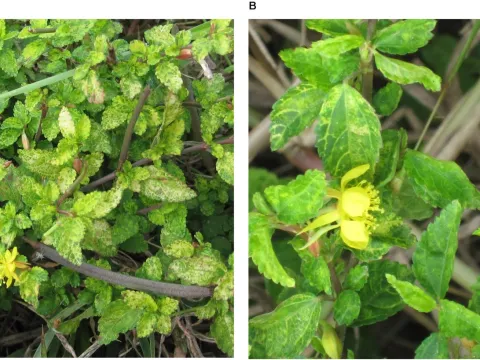
Jute leaf curl virus
Begomovirus corchovenae
The causative agent of the disease is Begomovirus corchovenae, a member of the genus Begomovirus within the Geminiviridae family. This virus possesses a single-stranded circular DNA genome and exhibits specific tropism for Malvaceae family crops.
What the section contains
Jute leaf curl virus
The infectious agent attacks the vascular system of the plant, impeding the normal transport of nutrients. The virus is an obligate parasite, entirely dependent on the cellular metabolism of the jute plant for the replication of its genetic material.
The primary vector for this pathogen is the tobacco whitefly (Bemisia tabaci). During feeding, the insect acquires the virus, which is then retained within the vector's body for an extended period, enabling the whitefly to transmit the disease to healthy plants.
The viral genome is adapted for rapid spread within tropical and subtropical agroecosystems. The high variability of begomoviruses presents significant challenges in breeding jute varieties resistant to the infection.
Detection of the pathogen requires laboratory-based diagnostic methods, such as PCR analysis, as symptoms of the disease can easily be confused with nutrient deficiencies or herbicide-induced physiological disorders.
The primary manifestation of the disease is pronounced curling and deformation of the leaf blades. Leaves become wrinkled, and their margins curl inward or outward, giving the plant a characteristic "corrugated" appearance.
There is a significant slowing of growth rates in infected jute plants. Internodes are shortened, resulting in a dwarfed, stunted habit that prevents the plant from reaching its full developmental potential.
In the early stages, leaf mosaic symptoms often appear, characterized by alternating patches of light-green and dark-green coloration. This indicates a disruption of photosynthesis and the degradation of chloroplasts within the mesophyll cells.
As the disease progresses, affected shoot tips may turn yellow or display chlorosis. The plant becomes visibly distressed, losing turgor pressure even when soil moisture levels are adequate.
- Vein clearing and yellowing of the leaf veins.
- Abnormal tissue proliferation on the leaves.
- Early abscission of buds or total lack of flowering.
- Overall suppression of the aerial part growth.
The development of the disease is directly dependent on the population density of the tobacco whitefly. The most intense spread of the virus occurs during periods of warm and dry weather, which favor the active reproduction of the vector.
The migration of whiteflies from weeds to jute fields is the primary trigger for disease outbreaks. Weeds growing in and around the fields serve as natural reservoirs for the virus during the off-season.
Poor crop rotation and a lack of quarantine measures contribute to the accumulation of the pathogen in the soil and plant debris. The virus persists in perennial wild plants, which act as a source of infection for emerging seedlings.
High humidity alternating with sharp temperature fluctuations can weaken plant defenses, making them more susceptible to viral invasion upon contact with the insect vector.
Intensive application of nitrogen fertilizers can stimulate excessive growth of soft tissues, which attracts whiteflies and facilitates their feeding, thereby increasing the risk of viral transmission during the growing season.
Jute leaf curl virus causes devastating losses in fiber yield. Affected plants produce low-quality fiber that becomes brittle and loses its spinning properties due to the disruption of the cellular structure of the stalk.
A significant reduction in the photosynthetic leaf area leads to a failure in biomass accumulation. Yield per hectare can decrease by 40–80%, depending on the timing and severity of the infection during the early stages of development.
Infected fields often exhibit uneven growth, complicating mechanized harvesting operations. This results in additional financial losses due to the low marketability of the harvested raw material.
The infection makes the crop vulnerable to other secondary pathogens. Weakened plants are more frequently attacked by fungal diseases, leading to root and stem rots toward the end of the growing cycle.
Economic damage also includes the costs of repeated insecticide applications required to suppress the virus vector population, which increases the overall cost of production for the final agricultural product.
The primary control strategy is the management of the tobacco whitefly population. The use of effective systemic insecticides during the early stages of plant growth significantly lowers the probability of healthy plant infection.
Important preventive measures include maintaining adequate spatial isolation between jute fields and other susceptible crops or known vector habitats. Rigorous removal of weeds from the vicinity is an essential requirement.
The use of resistant or tolerant jute varieties is the most economically sound strategy. Breeding efforts are focused on creating genetically protected forms capable of restricting viral replication within plant tissues.
Adhering to optimal planting schedules allows farmers to avoid peak whitefly migration windows. Early planting often enables plants to mature sufficiently before the mass arrival of the pest, increasing their survival rates.
Implementing biological control methods, including the use of entomophagous insects, helps manage vector populations within an integrated pest management (IPM) framework, minimizing the chemical load on the agroecosystem.