
Kalanchoe macula virus
Badnavirus maculakalanchoes
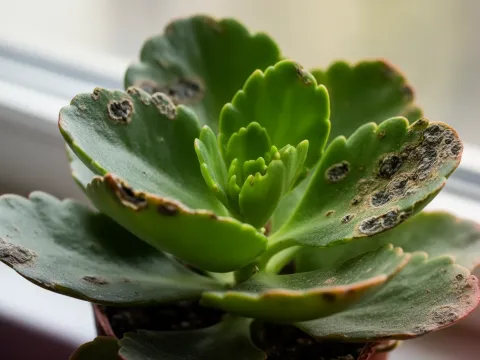
The primary symptom of Kalanchoe macula virus is the appearance of chlorotic spots on leaves, which often develop into characteristic ring-like or arc-shaped patterns.
What the section contains
Kalanchoe macula virus
As the infection progresses, necrotic patches may appear on the leaf tissue, leading to deformation and premature leaf drop in severe cases.
Infected Kalanchoe plants often exhibit stunted growth, resulting in reduced height and brittle, underdeveloped stems compared to healthy specimens.
A mosaic pattern may emerge across the leaf surface, indicating the disruption of photosynthetic processes and a reduction in overall chlorophyll content.
Since the virus is systemic, symptoms usually start on younger, newly emerging leaves and gradually spread to the rest of the plant.
The pathogen responsible is Badnavirus maculakalanchoes, a viral agent belonging to the genus Badnavirus within the family Caulimoviridae.
This virus is characterized by a circular double-stranded DNA genome, which is integrated into the host's cellular machinery to facilitate replication.
It acts as an obligate parasite, thriving within the vascular tissues of Kalanchoe species and causing complex physiological metabolic shifts.
Transmission occurs primarily through mechanical vectors, including contaminated gardening tools, or via propagation using infected plant tissues.
Biological persistence of this virus is high, making the internal tissue of the plant a long-term reservoir for the pathogen once infection is established.
The disease thrives in environments where high plant density is maintained, such as commercial greenhouses or dense indoor plant collections.
High humidity and improper temperature management create stress on the plants, weakening their natural defenses against viral invasion.
The primary vector for the virus in cultivation settings is human activity, specifically the use of unsterilized tools during routine pruning or propagation.
Insect pests, particularly aphids and mealybugs that pierce leaf tissues, can contribute to the dissemination of the virus between neighboring plants.
The introduction of new, non-quarantined plants into an existing collection is the most frequent cause of rapid outbreaks in professional nurseries.
The economic impact of this virus is significant, primarily due to the loss of aesthetic value, rendering the plants unsellable in the commercial market.
Systemic infection leads to a decline in vigor, where the plant stops flowering and eventually succumbs to poor health due to metabolic exhaustion.
Infected tissues become highly susceptible to secondary invaders, including opportunistic fungal pathogens that exacerbate the overall damage.
Because there is no cure, a single infected plant can jeopardize an entire production batch, necessitating large-scale culling to control the spread.
The persistence of the virus within cuttings ensures that propagation from infected mothers will consistently produce diseased offspring.
Rigorous sanitation protocols are mandatory; all pruning shears and tools must be disinfected with alcohol or bleach between each individual plant.
Immediate removal and destruction of any plant displaying suspect symptoms is the only effective way to prevent the infection from reaching other plants.
Proactive pest management is essential to limit the presence of sap-sucking insects that could act as potential vectors for the virus.
Implement a strict quarantine period for all new plant arrivals, ensuring they are isolated until they are confirmed to be free of viral symptoms.
Maintain optimal cultural conditions, including adequate lighting and proper irrigation, to promote plant health and increase resilience to potential infections.