
Jute mosaic
Begomovirus corchomusivi
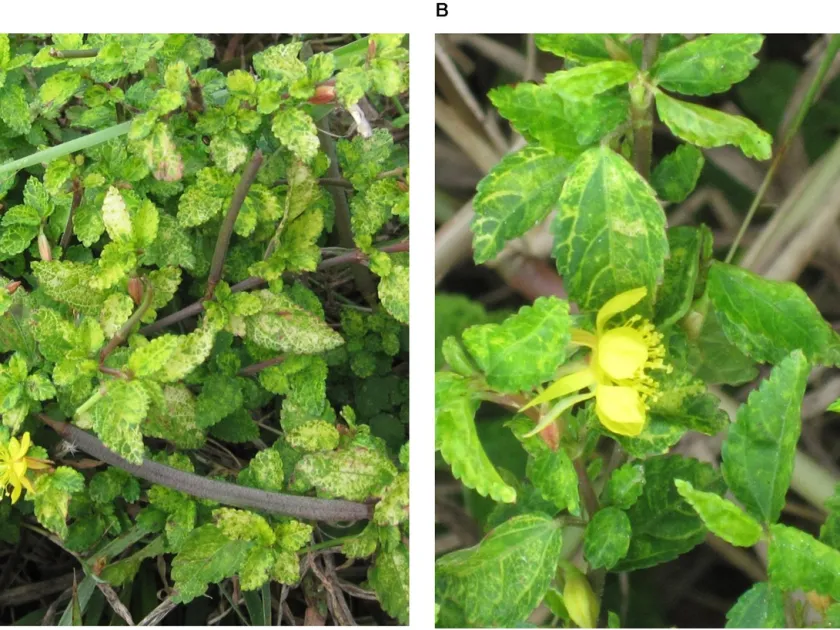
Description
Symptoms
The first signs of Jute mosaic are characterized by a distinct yellow and green mottling pattern on the younger leaves. This mosaic appearance is the classic symptom of the infection.
As the disease progresses, the leaves exhibit severe curling and distortion. The leaf lamina becomes wrinkled, and the overall size of the leaves is drastically reduced, hindering photosynthesis.
Infected jute plants display stunted growth and are noticeably shorter than healthy plants in the same field. Internodes become shortened, leading to a compact and bushy appearance of the top section.
Chlorosis is a common secondary sign, with the leaves turning pale or yellowish. The texture of the foliage may change, becoming brittle and prone to breakage under stress.
Reproductive growth is often severely affected. Infected plants may fail to flower, or if pods do develop, they are malformed, leading to a significant loss in seed production and fiber quality.
Pathogen
Jute mosaic is a devastating viral disease caused by viruses belonging to the Begomovirus genus. These viruses possess circular single-stranded DNA and are primarily transmitted by insect vectors in the field.
The disease is classified as a systemic viral infection. Once the virus enters the plant cells, it replicates and travels through the phloem, infecting all parts of the plant host.
The primary vector for Jute mosaic is the whitefly Bemisia tabaci. The insect acquires the virus through feeding on infected tissue and transmits it during subsequent feeding bouts on healthy jute plants.
The interaction between the Begomovirus and the whitefly is highly specific. Once an insect picks up the virus, it remains a vector for the duration of its life cycle, facilitating rapid spread.
The biology of the pathogen makes it extremely difficult to treat once the plant is infected. The focus of pathology is therefore on preventing the interaction between the vector and the crop.
Conditions for development
High temperatures and dry conditions create the perfect environment for the rapid multiplication of the whitefly population. These weather conditions often correlate with severe outbreaks of the virus.
Weed management plays a crucial role, as various weed species act as alternative hosts for the virus. These reservoirs allow the virus to persist during the off-season and re-emerge when jute is planted.
High-density planting can facilitate the quick spread of the whitefly vector from plant to plant. Proper spacing is essential to reduce the movement of the vector within the crop canopy.
Proximity to other susceptible crops or fields with prior infection history significantly increases the risk. Whiteflies are highly mobile and can be carried by wind over long distances.
Poor field sanitation, such as failing to remove infected plant debris from previous seasons, creates an immediate source of primary inoculum that can infect newly emerged jute seedlings.
Why it matters
The most significant impact of Jute mosaic is the major reduction in fiber yield. Infected plants cannot develop the biomass required for the textile industry, leading to direct economic loss.
Fiber quality is severely compromised. The resulting fibers are often short, weak, and brittle, making them unsuitable for high-grade textile processing and reducing their market price.
Early-stage infection can lead to the total loss of plants, resulting in poor stand establishment. This reduces the overall plant density and lowers the efficiency of land usage.
The physiological stress caused by the virus makes the jute crop more susceptible to secondary infections by bacteria or fungi, further exacerbating the damage to the total harvest.
Farmers face financial pressure due to both the direct loss of fiber and the recurring costs of insecticide treatments required to manage the vector population.
Protection
Management of the whitefly population is the cornerstone of control. Systematic application of appropriate insecticides is necessary to minimize the vector's ability to transmit the virus.
Implementing strict field sanitation is essential. This includes the complete removal and destruction of infected plants and the regular weeding of field borders to eliminate reservoir hosts.
The use of resistant or tolerant cultivars is the most sustainable approach to managing Jute mosaic. Breeding programs focus on developing varieties that can withstand viral pressure.
Crop rotation and maintaining spatial isolation from other whitefly-susceptible crops can significantly lower the rate of initial infection in a newly planted field.
Early detection and rogueing, or the immediate removal of any symptomatic plants, are vital steps to contain the virus within localized patches and prevent a field-wide epidemic.
Discussion
No discussions yet — be the first.