
American plum line pattern virus
Ilarvirus apnmv
The causal agent is the American plum line pattern virus (APLPV), a member of the genus Ilarvirus. It consists of quasi-spherical particles with a genome based on segmented positive-sense single-stranded RNA.
What the section contains
American plum line pattern virus
This virus primarily infects Prunus species, including plums, peaches, and apricots. It causes systemic infection, meaning the virus moves through the vascular system to colonize the entire plant.
Transmission occurs mainly through vegetative propagation, specifically the use of infected scions or rootstocks during budding or grafting processes.
Pollen transmission has also been documented, suggesting that the virus can spread within orchards via cross-pollination, although this rate is typically low.
The virus remains stable in plant sap for short periods, facilitating transmission via contaminated pruning equipment if hygienic measures are not strictly followed.
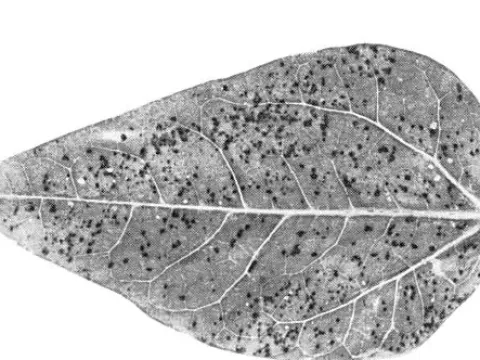
Symptoms appear primarily during the spring as yellow or chlorotic patterns, including lines, rings, and oak-leaf shapes on the foliage of affected trees.
The pattern is often distinct, resembling a map or a delicate network of lines, which gives the disease its specific common name.
As temperatures rise during the summer months, the symptoms frequently fade, making the trees appear healthy despite remaining systemically infected.
Fruit symptoms may include premature ripening, deformation, and changes in pigmentation, which significantly reduces the marketability of the harvest.
In chronic cases, trees show reduced vigor, stunted shoot growth, and a general decline in productivity over several growing seasons.
The development of the disease is highly dependent on the initial health status of the nursery stock used to establish the orchard.
Environmental conditions, particularly cool spring weather, favor the expression of foliage symptoms, making this the best time for disease monitoring.
Human activity is a primary factor in the spread of the virus, particularly the use of contaminated tools during seasonal pruning or harvesting.
The presence of wild Prunus species in the surrounding area can act as an inoculum reservoir, providing a source for viral spread via pollen and insects.
Integrated orchard management, which lacks strict quarantine or testing protocols, creates conditions that allow the virus to establish and persist over decades.
The economic impact is primarily driven by yield reduction, as infected trees produce fewer and lower-quality fruits, leading to financial losses.
The disease forces early removal of orchards, as infected trees fail to maintain the necessary production levels required for commercial viability.
Secondary infections often take hold because the virus impairs the natural defense mechanisms of the tree, making it more susceptible to fungal pathogens.
Reduced winter hardiness in infected trees can lead to increased mortality rates during harsh winters, resulting in uneven stand distribution.
Losses are compounded by the costs of diagnostic testing and the removal/replacement of diseased trees before they reach the end of their productive lifespan.
The most critical control measure is the use of virus-free, certified nursery stock obtained from reliable, tested sources.
Orchards should be monitored annually during the spring for symptoms; any infected trees must be removed and destroyed to prevent further spread.
Strict sanitation protocols must be enforced for all pruning tools, including disinfection with approved chemical solutions between every tree.
Creating isolation zones between new plantings and old, potentially infected blocks is an effective way to minimize the risk of pollen-borne transmission.
- Implement systematic scouting to identify symptomatic trees early in the season.
- Adopt modern diagnostic techniques like ELISA or RT-PCR for nursery stock certification.
- Maintain orchard hygiene to reduce environmental stress that exacerbates viral decline.