
American tomato ring-spot virus
Nepovirus americaense
Description
Symptoms
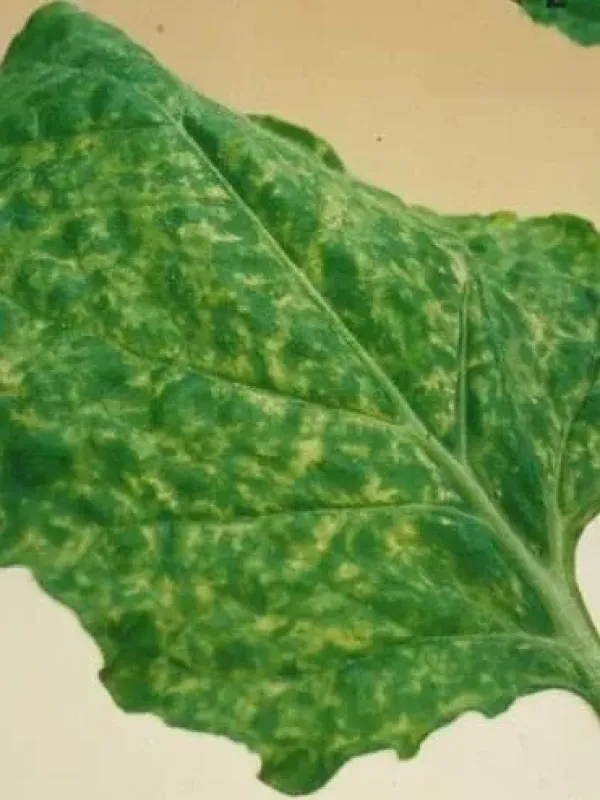
One of the hallmark symptoms includes chlorotic spotting on leaves, which often progresses into distinct rings or mosaic patterns, indicating a severe viral infection.
Infected leaves exhibit significant deformation, including curling, wrinkling, and narrowing, which limits the photosynthetic efficiency and weakens the overall vigor of the plant.
Stunting is a common observation in infected tomato crops; the plant height is noticeably reduced compared to healthy specimens, often accompanied by shortened internodes.
Reproductive growth is severely hampered. Flowers may exhibit abscission, and developing fruits often show blemishes, necrotic rings, or irregular ripening patterns.
The systemic nature of the pathogen ensures that the symptoms are visible across the plant canopy, often being most pronounced in the youngest, most actively growing tissues.
Pathogen
The causative agent of this disease is Nepovirus americaense, a member of the Nepovirus genus. It is a plant-pathogenic virus characterized by a genome consisting of linear single-stranded RNA.
This virus has a significant impact on several economically important vegetable crops, with the tomato plant being one of its primary hosts. It replicates systemically within the plant cells.
The virus is distinguished by its ability to persist in seeds, which represents a critical challenge for biosecurity and agricultural trade within the affected regions.
The replication cycle involves the hijacking of host cell machinery, which disrupts normal development and physiological processes of the infected plant.
Genetic variability is a hallmark of this virus, allowing it to adapt to diverse ecological conditions and host cultivars, complicating long-term management strategies.
Conditions for development
The spread of Nepovirus americaense is heavily dependent on soil-borne nematode vectors, which transmit the virus while feeding on the plant root systems.
Environmental conditions that favor the activity and mobility of these nematodes, such as warm temperatures and adequate soil moisture, significantly increase the rate of viral spread.
Human activity is a major factor in spreading the virus, particularly through contaminated farm equipment, pruning tools, and improper hygiene during field operations.
Weeds growing in or around the fields often act as asymptomatic reservoirs for the virus, allowing it to survive through seasons when the host crop is not present.
High planting density can facilitate the spread of the pathogen, as physical contact between adjacent plants increases the chance of transmission through mechanical injury.
Why it matters
The virus causes substantial yield losses, as the metabolic impairment leads to reduced fruit size, quantity, and a significant decline in the overall quality of the harvest.
Produce from infected plants often fails to meet market standards due to external defects, such as ring-spotting and distortion, resulting in financial losses for producers.
Chronic infection weakens the plant's natural defenses, making it more susceptible to secondary attacks by pests and opportunistic fungal or bacterial pathogens.
In seed production, the presence of the virus is a major concern as it restricts the movement of seeds across borders due to international phytosanitary trade regulations.
In severe infestation cases, the economic viability of the entire crop can be compromised, leading to the necessity of destroying the affected plantings to prevent further contamination.
Protection
The primary prevention strategy is the use of certified virus-free seeds and seedlings, ensuring that initial planting material is screened for the presence of the virus.
Implementing strict sanitation protocols, such as disinfecting pruning tools and farm equipment with appropriate chemical solutions, is essential to prevent mechanical transmission.
Effective management of nematode populations through crop rotation with non-host species and the use of nematicides helps to reduce the vectors of the virus.
Early identification and rigorous roguing (removal) of symptomatic plants from the field can significantly curtail the secondary spread of the virus within the crop.
Maintaining a weed-free environment in and around production areas is a crucial step in eliminating reservoir hosts that allow the virus to persist in the ecosystem.
Discussion
No discussions yet — be the first.