
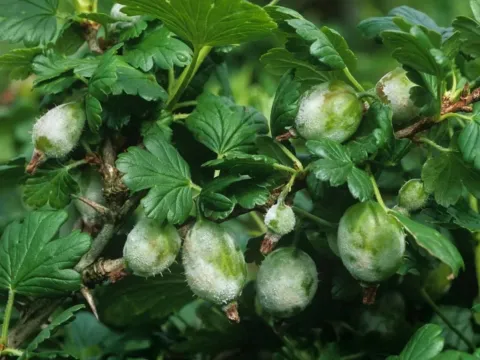
American gooseberry mildew
Cherry american
The causal agent is the fungus Sphaerotheca mors-uvae, an obligate parasite that specifically targets members of the Grossulariaceae family. It feeds on the epidermal cells of the host plant.
What the section contains
American gooseberry mildew
The fungus reproduces via asexual conidia during the growing season, which are wind-dispersed to facilitate rapid spread. Sexual reproduction occurs via cleistothecia for overwintering purposes.
It overwinters primarily as mycelium on infected dormant shoots and as fruiting bodies within fallen leaves. In early spring, the life cycle restarts with primary infections.
While primarily infecting gooseberries, the pathogen can also manifest on currants. The severity of the infection depends heavily on the susceptibility of the specific cultivar.
The fungus attacks all young tissues, including shoots, leaves, and developing berries, which can stunt the overall growth of the bush significantly over time.
Initial symptoms are visible as a white, powdery dusting on young leaves. This coating gradually thickens, turns brown, and takes on a felt-like appearance as the fungus matures.
Leaves affected by the disease tend to curl and become brittle. Infected shoots grow crookedly and often experience stunted development, eventually drying out and dying.
Developing berries show signs of infection when a white, dusty film covers them. As the disease progresses, this film hardens into a dark brown crust, making the fruits inedible.
Tiny black dots appearing on the felt-like fungal mats are the overwintering bodies (cleistothecia). Their presence is a clear indicator of a well-established infection.
Severely affected bushes appear stunted and lose their leaves prematurely, which gives the plants a characteristic sickly, neglected appearance during the summer months.
High relative humidity and moderate temperatures (18-25°C) are the primary drivers of fungal growth. Morning dews and frequent fog provide optimal conditions for spore germination.
Excessive use of nitrogen fertilizers promotes soft, succulent growth that is highly vulnerable to fungal penetration. Proper fertilization balance is key to disease prevention.
Poor aeration within the canopy is a major factor. If bushes are not pruned correctly, the lack of airflow maintains high humidity levels conducive to pathogen spread.
Overhead irrigation methods can splash spores from infected debris onto healthy plant parts, accelerating the spread of the infection throughout the entire garden.
Even in drier climates, the disease can persist in shaded or crowded areas where the microclimate remains humid, allowing the mycelium to survive and flourish.
The primary economic loss is the total destruction of the berry crop. Affected fruits are unmarketable, unpleasant to taste, and often drop from the bushes before harvest.
Premature leaf drop leads to a weakened plant that cannot properly store energy for the winter. This significantly increases the risk of winterkill in colder regions.
Chronic infestation exhausts the gooseberry bush, leading to progressive dieback. Without management, plants can become non-productive or die completely within a few seasons.
Distorted shoots and inhibited growth reduce the vigor of the plant, lowering potential yields for subsequent years and destroying the overall structure of the shrub.
An infected garden acts as a reservoir for the disease, making it nearly impossible to grow susceptible cultivars without intensive and costly chemical interventions.
Choosing resistant cultivars is the most effective long-term strategy for managing this disease. Breeding programs have produced several varieties with high immunity.
Sanitation is critical. Regularly prune infected shoots and collect fallen leaves to reduce the primary inoculum load. Properly dispose of or burn all infected plant material.
Fungicide programs should be timed carefully. Applications before flowering and immediately after harvest are essential to suppress the pathogen's development during the season.
- Thinning out the bush to ensure better air circulation;
- Balanced application of potassium and phosphorus fertilizers;
- Using organic mulch to prevent spores from splashing back up;
- Applying biological fungicides as a safer alternative for late-season protection.
Always disinfect pruning shears after working with infected plants to prevent the accidental transfer of fungal spores to healthy sections of your berry garden.