
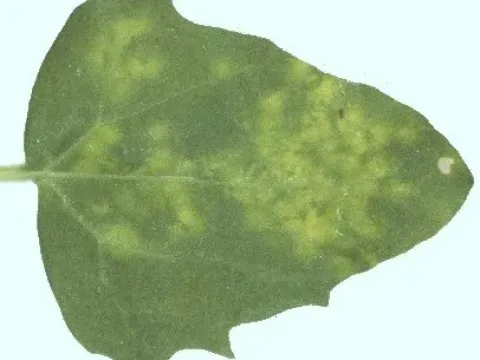
American carlavirus
Carlavirus americanense
American carlavirus (lat. Carlavirus americanense) is a member of the genus Carlavirus within the Betaflexiviridae family. It is a significant phytopathogen transmitted primarily through non-persistent modes by insect vectors, most notably aphids.
What the section contains
American carlavirus
The viral particle is characterized by a filamentous structure containing a single-stranded, positive-sense RNA genome. Its environmental stability is relatively low, yet it spreads rapidly within intensive agricultural systems.
Unlike many other pathogens, this virus often exhibits a latent phase, making early detection extremely difficult. Infection spreads through contaminated planting material and various weed species that act as reservoirs.
The viral genome encodes proteins essential for replication and capsid formation, alongside specialized movement proteins that facilitate viral transit through plasmodesmata into adjacent plant cells.
The pathogen's biology is tightly linked to the life cycle of its vectors, which transmit viral particles to healthy host plants within minutes during feeding.
Initial symptoms of American carlavirus infection often manifest as chlorotic mosaic patterns on the leaves. These patterns can range from small spots to extensive discolored areas along the leaf veins.
A hallmark symptom is the deformation of the leaf lamina, often accompanied by curling and stunted growth. In certain cases, intermodal shortening is observed, resulting in a dwarfed appearance.
As the infection progresses, deformation of generative organs may occur, leading to reduced yield quantity and quality. Flowers may show loss of color intensity or develop atypical, variegated patterns.
- Yellowing of leaf veins
- Curling of terminal shoots
- Inhibition of root system development
- Significant reduction in total plant biomass
Symptoms are frequently exacerbated by concurrent infections with other viral agents, forming what is known in agronomy as a "viral complex," which causes severe plant decline.
Viral development is most intense during periods of high insect vector activity. Optimal temperature ranges between 20 and 25 degrees Celsius significantly favor aphid population growth.
Inadequate management of field margins and weed control around greenhouses provides a consistent environment for the accumulation of primary inoculum.
Dense planting and excessive nitrogen fertilization increase plant attractiveness to sap-sucking pests, indirectly accelerating the spread of American carlavirus throughout the field.
In protected cultivation, the virus can persist year-round if infected planting material is introduced, serving as a primary source of infection after every transplantation cycle.
Abiotic stresses, such as drought or sudden temperature fluctuations, weaken the plant's immune response, making them more susceptible to systemic viral invasion.
The primary economic impact of American carlavirus is the drastic reduction in the marketable quality of agricultural produce. Infected plants suffer from impaired photosynthetic efficiency.
Depending on the growth stage at the time of initial infection, the virus can lead to crop losses ranging from 20% to 60% across agricultural holdings.
The virus disrupts normal fruit maturation, rendering the harvest unsuitable for long-term storage or transport. This results in direct financial loss for the agribusiness sector.
Infected seeds or propagating material show lower germination rates and vitality, resulting in sparse stands and the costly requirement for replanting large areas.
Long-term survival of the virus in soil through infected crop residues makes it difficult to cultivate susceptible crops in the same area for several years without rigorous phytosanitary measures.
The primary control strategy involves the use of certified virus-free planting material that has undergone rigorous laboratory screening via ELISA or PCR.
Strict monitoring of aphid populations and other sap-sucking pests is essential, utilizing systemic insecticides early in the growing season to prevent primary transmission.
Agronomic management includes the regular removal of weeds that serve as virus reservoirs and the implementation of spatial isolation between new and old crop plantings.
- Use of resistant or tolerant cultivars
- Regular disinfection of farming equipment and tools
- Immediate removal and destruction of infected plants with root systems
- Crop rotation with non-host species
There are no chemical curative treatments for infected plants, making all management efforts focused strictly on prevention and limiting the spread of infection clusters.