
Hollyhock yellow-vein
Hollyhock yellow-vein mosaic agent
Description
Symptoms
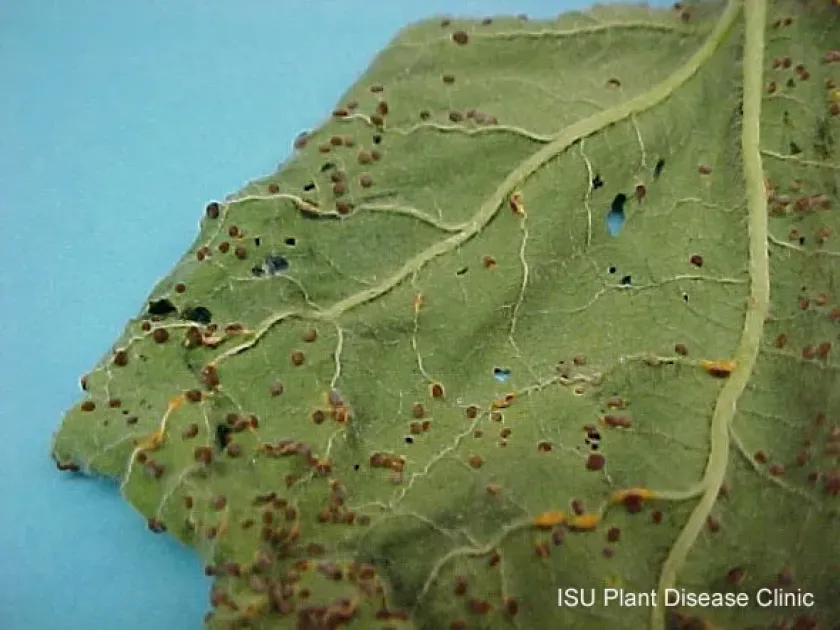
The most distinctive symptom is the chlorotic yellowing of the leaf veins, which creates a visible, intricate yellow network against the green leaf surface.
As the infection progresses, the interveinal yellowing spreads, causing a general mosaic pattern of light and dark patches to appear across the foliage.
Affected plants often display severe leaf deformation, leading to curling, puckering, and the production of undersized leaves that look unhealthy.
The overall growth of the plant is stunted, and flowering may be significantly reduced or completely absent due to the plant's weakened metabolic state.
- Yellowing of leaf veins
- Mosaic pattern on leaves
- Deformed and curled leaves
- Stunted plant development
Pathogen
The causative agent of this disease is the Malva yellow vein virus (MaYVV), which belongs to the Geminiviridae family of viruses.
This is a systemic viral infection that targets the vascular system of the host plant, specifically the phloem, causing significant disruption to nutrient flow.
The primary vector for the transmission of this virus in natural conditions is the whitefly (Bemisia tabaci), which transmits the pathogen during feeding.
Once inside, the virus replicates and travels throughout the plant, integrating itself into the host's system and remaining there for the life of the plant.
In addition to insect vectors, the virus can be spread through contaminated pruning tools or by propagating plants from infected mother stock.
Conditions for development
The spread of the disease is highly dependent on warm weather conditions, which favor the rapid reproduction and migration of the whitefly vector.
Dense, overcrowded planting environments limit air circulation and allow whiteflies to move easily between plants, accelerating the spread of the virus.
Wild plants within the mallow family often act as secondary hosts, providing a reservoir for the virus to persist in the garden environment.
Environmental stress, such as insufficient irrigation or poor soil nutrition, makes plants more susceptible to initial infection and symptom progression.
The peak incidence of the disease typically occurs mid-to-late summer when the whitefly populations reach their maximum activity levels.
Why it matters
The disease significantly degrades the aesthetic value of the plants, rendering them unsuitable for ornamental garden use.
The viral infection interferes with the photosynthetic ability of the plant, leading to a general decline in vigor and long-term health.
Heavily infected plants are often unable to store enough energy for proper overwintering, frequently resulting in plant death.
By acting as a source of the virus, sick plants put other nearby susceptible species at risk, potentially leading to widespread infection in the area.
The irreversible nature of the infection often requires the removal and destruction of the plant to prevent further transmission in the flower bed.
Protection
The most effective strategy is the immediate removal and disposal of infected plants, ensuring they are burned or sealed in bags to eliminate the source.
Strict control of the whitefly population is essential; using systemic insecticides can help manage the insect vectors responsible for viral spread.
Maintaining good garden hygiene, including the removal of weeds related to the mallow family, helps to eliminate potential virus reservoirs.
Tools used for pruning or maintenance must be sanitized thoroughly with alcohol or bleach after each use to prevent accidental mechanical transmission.
Encouraging spatial diversity in plantings and using healthy, certified stock are critical steps in preventing the onset of mosaic diseases.
Discussion
No discussions yet — be the first.