
Hippeastrum mosaic virus
Potyvirus hippeastri
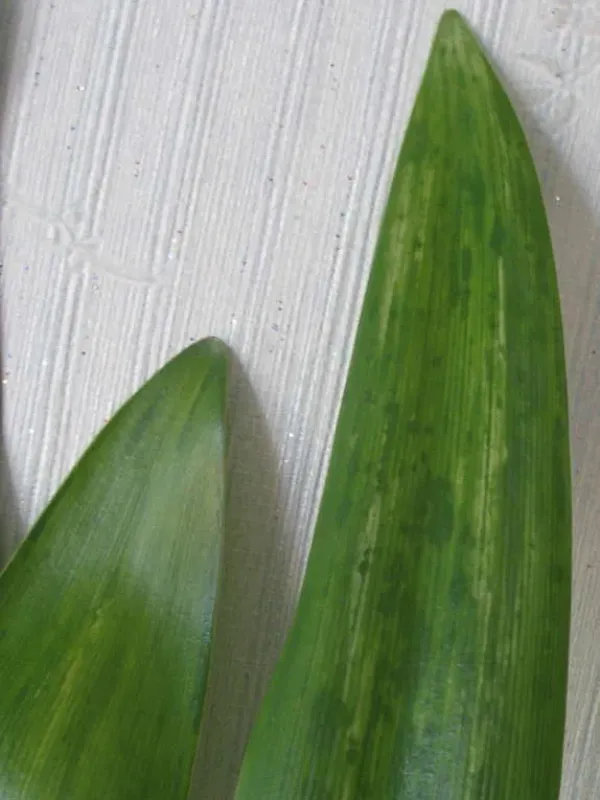
Description
Symptoms
The primary sign of infection is the appearance of characteristic light green, yellowish, or whitish streaks and spots on the leaves. Often, the pattern resembles a mosaic or alternating broken lines.
As the disease progresses, visible deformation and curling of leaf blades are observed. The plant begins to show significant stunting and reduced development compared to healthy specimens.
Flower stalks affected by Hippeastrum mosaic virus are often shortened, twisted, or lose their structural integrity. Flowers may develop atypical spots on the petals, a condition known as color breaking.
The inner scales of the bulb may show signs of necrosis or degeneration during prolonged viral disease. This leads to a gradual exhaustion of the plant's nutrient reserves.
- Leaf streaking and mosaic patterns
- Deformed flower stalks
- General growth suppression
- Reduced flowering quality
Pathogen
The causative agent of the disease is the Hippeastrum mosaic virus (HiMV), which belongs to the Potyvirus genus. This plant pathogenic virus features filamentous virions containing single-stranded RNA.
This virus primarily infects ornamental plants of the Amaryllidaceae family. The high-risk group includes hippeastrums, amaryllis, vallota, clivia, and several other related bulbous crops.
The virus spreads systemically throughout all plant tissues, including the bulb, making it extremely dangerous for vegetative propagation. Transmission occurs mechanically (via cutting tools) or through insect vectors.
The main vectors in nature and greenhouse environments are various species of aphids. These insects acquire the virus by feeding on the sap of infected plants and immediately transmit it to healthy specimens.
Since the virus integrates into the plant's biological processes, complete recovery of infected plants using current agricultural techniques is virtually impossible.
Why it matters
Hippeastrum mosaic virus causes significant economic damage to floral production. Infected specimens lose their aesthetic value, rendering them unsuitable for commercial sale or landscaping.
Long-term infection leads to a substantial decline in the plant's immune system. Consequently, the crop becomes more susceptible to secondary fungal and bacterial infections present in the soil.
The virus triggers the gradual degeneration of varietal characteristics. Bulbs of infected plants become smaller, the number of offsets decreases, and their overall vitality drops sharply.
Within a greenhouse collection, a single infected bulb can trigger an epiphytotic. Without strict control, the virus can spread across the entire cultivation area within one season.
A particular danger lies in the asymptomatic course of the disease during early stages, where the plant appears visually healthy but is already a carrier of the infection.
Protection
The only effective method for managing Hippeastrum mosaic virus is the radical removal and destruction of infected plants. Affected specimens must be isolated and disposed of by burning immediately.
Strict disinfection of gardening tools is critical. Knives, pruning shears, and other instruments must be sterilized with alcohol-based solutions or heat-treated after contact with every individual plant.
Prevention of virus spread is impossible without tight control of aphid populations. Using systemic insecticides helps reduce the activity of vectors and limits the spread of the infection.
When purchasing new planting material, prefer reliable suppliers and carefully inspect bulbs for hidden defects or spotting.
A mandatory quarantine period for all newly acquired plants is essential. Keep them isolated from the main collection for 30–40 days to rule out any risk of infecting the healthy stock.
Discussion
No discussions yet — be the first.