
Higrevirus
Higrevirus
Higrevirus is a genus of plant viruses within the Virgaviridae family. These pathogens are characterized by a rod-shaped capsid structure that encloses a single-stranded RNA genome, which is responsible for the infection cycle in host plants.
What the section contains
Higrevirus
The virus acts as an obligate parasite, forcing host cells to replicate the viral genome and synthesize viral proteins at the expense of the plant's normal metabolic functions.
Genetic analysis shows that Higrevirus possesses specialized proteins designed to facilitate the movement of viral particles through plasmodesmata, allowing the infection to spread systemically from cell to cell.
The stability of the viral particles outside the host cell is a significant factor in their persistence, as they can remain viable in soil and plant residues for extended periods of time.
Due to the virus's ability to mutate and adapt to host defense responses, it remains a challenging subject in plant virology, requiring advanced molecular diagnostic tools for accurate identification.
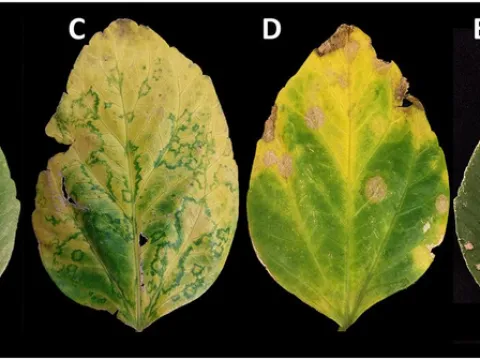
The primary symptoms of Higrevirus infection include localized chlorotic spotting, which often evolves into systemic mosaic patterns across the leaf surface as the virus spreads.
Leaves often exhibit curling, deformation, and stunted growth. The reduction in the photosynthetic area caused by these symptoms directly correlates with a decrease in the plant's vigor.
In systemic infections, plants show distinct morphological changes, including shortened internodes and the malformation of fruits or flowers, which can severely impact aesthetic and agricultural value.
Necrotic lesions may develop on leaves and stems in advanced stages of the disease, reflecting the localized death of tissue due to intense viral replication and host stress.
Floral symptoms such as color breaking or irregular variegation in petals are frequently observed, particularly in ornamental plants, serving as a diagnostic indicator of viral presence.
Higrevirus spreads primarily through mechanical transmission, such as contact with contaminated tools, or via physical abrasion during standard agricultural practices like pruning or harvesting.
The development and spread of the virus are favored by warm temperatures and high humidity, which support both the health of the host and the activity of potential insect vectors.
Various insect species, including aphids and thrips, act as effective vectors that transmit the virus from infected to healthy plants while feeding on plant sap.
Monoculture farming systems provide an ideal environment for the virus to establish and persist, as the high density of susceptible host plants facilitates rapid secondary infections.
Residual viral load in the soil and the presence of perennial weeds that host the virus create persistent infection reservoirs, making it difficult to eradicate the disease from a field.
The impact of Higrevirus on agriculture is significant, leading to marked reductions in both the quantity and quality of marketable crops, often resulting in complete harvest failure.
Infected plants exhibit a weakened immune system, making them highly susceptible to secondary attacks by fungi and bacteria, which complicates the clinical picture of the crop disease.
Seeds derived from infected plants often show poor germination rates and stunted seedling growth, which directly affects the viability and uniformity of subsequent crops.
Nutritional degradation is a common consequence of infection, as the virus disrupts chlorophyll synthesis and the translocation of sugars, resulting in poor flavor and lower vitamin content.
For large-scale agricultural operations, the presence of Higrevirus imposes a high economic burden due to the costs associated with plant removal, replanting, and the implementation of containment measures.
The foundation of effective management is the use of pathogen-free, certified seeds and nursery stock, ensuring that no initial infection is introduced into the cultivation area.
Sanitation practices are critical; tools and machinery must be regularly disinfected with effective virucidal solutions to prevent the mechanical transmission of the virus between plants.
- Prompt identification and removal of infected plants to limit the spread of the pathogen.
- Integrated pest management to control insect vectors that facilitate viral transmission.
- Rotation of crops with non-host species to break the life cycle of the virus in the soil.
- Strict weed management to eliminate reservoirs of the virus in the field environment.
- Implementation of physical or biological barriers to prevent the introduction of infected material.
Applying plant immunity boosters or elicitors can help enhance the plant's natural defense mechanisms, allowing for better tolerance against viral infection during the early growth stages.
Maintaining spatial isolation between newly planted fields and older, potentially infected areas is a proven strategy to protect young crops from early-stage viral contamination.