
Grapevine leafroll-associated virus 7
Velarivirus septemvitis
The causal agent of this disease is Grapevine leafroll-associated virus 7 (GLRaV-7), a member of the genus Velarivirus in the family Closteroviridae.
What the section contains
Grapevine leafroll-associated virus 7
It is an RNA virus that primarily spreads through infected propagation material, such as cuttings or grafted vines, which remain the main vector of transmission.
The virus strictly infects Vitis species, establishing a long-term systemic infection that affects the vascular tissues, specifically the phloem of the vine.
Biological studies suggest that while some leafroll viruses are transmitted by mealybugs, the transmission efficiency for GLRaV-7 is distinct, often linked closely to vegetative propagation.
The persistence of this virus in plant tissues makes it a significant challenge for nurseries and vineyard operators globally.
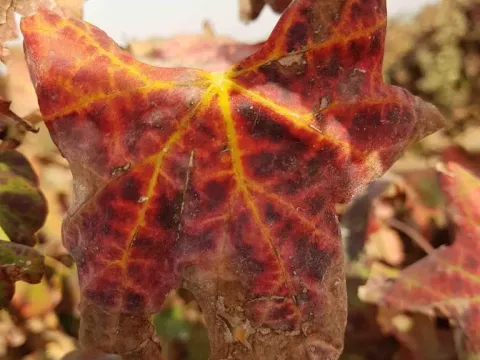
The characteristic symptom is the downward curling of leaves, which typically becomes most visible toward the end of the growing season.
In red grape varieties, leaves exhibit distinct reddish or purple discoloration in the interveinal areas, while the primary veins remain green for a long period.
White grape varieties show less dramatic symptoms, often manifesting as yellowing or chlorosis, which can sometimes be confused with nutrient deficiencies.
Infected vines frequently exhibit reduced vegetative growth, and their shoots may fail to mature properly, leaving them vulnerable to winter damage.
The fruit clusters of affected vines are often smaller and looser, with berries failing to develop adequate sugar levels and flavor profiles.
GLRaV-7 causes a significant reduction in photosynthetic efficiency, which directly affects the sugar accumulation and overall quality of the wine grapes.
The long-term impact on the vine is a steady decline in vigor and yield, eventually leading to the premature death of the infected grapevines.
Economic losses are substantial, as the fruit produced on infected vines is often unsuitable for premium winemaking due to its poor physiological maturity.
The systemic nature of the disease weakens the vine's resistance to secondary stressors, including drought, fungal pathogens, and harsh winter conditions.
Once a vineyard block is widely infected, the only viable economic decision is the removal of the entire planting to protect surrounding healthy vineyards.
The primary control strategy is the use of certified virus-free nursery stock, which is produced through rigorous laboratory testing protocols.
Regular monitoring and roguing (removal) of symptomatic vines are essential to limit the further spread of the virus within an established vineyard.
Strict disinfection of pruning tools and equipment between different vine rows is crucial to prevent mechanical transmission of the virus.
Nurseries should avoid selecting propagation material from vines that show any signs of leafroll symptoms to maintain the health of future plantings.
As no chemical cure exists for viral diseases in grapevines, preventive biosecurity measures remain the most effective approach for managing GLRaV-7.