
Malva mosaic virus
Potyvirus malvae
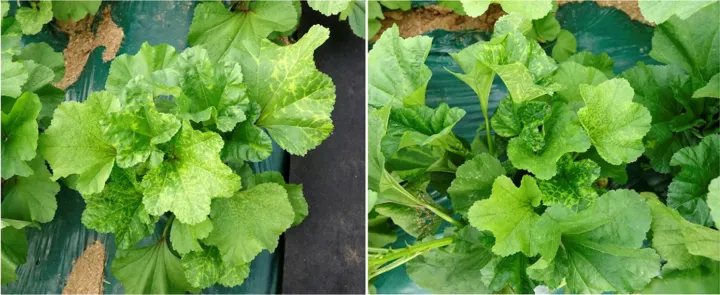
Description
Symptoms
The most prominent symptom of the disease is the characteristic mosaic pattern on the leaves. The leaf blade displays alternating patches of light green, yellowish, and dark green colors, forming a distinct mottled appearance.
As the pathology progresses, the leaves often show deformation, becoming wrinkled or developing irregular, wavy margins. Severely infected specimens exhibit stunted growth and reduced overall vigor compared to healthy counterparts.
Flowering becomes poor, and the flowers themselves frequently exhibit abnormal color patterns, such as light streaks or stripes. Petals may become twisted, which significantly reduces the ornamental value of the plants in landscapes and gardens.
In perennial plants, the virus can persist within the root system and stem tissues throughout the winter, resuming its development with the onset of the new growing season when the first young leaves emerge.
- Vein chlorosis (yellowing).
- Mottling and speckling of the leaf blade.
- Shortening of stem internodes.
- General plant stunting.
Pathogen
The causative agent of the disease is the Malva mosaic virus, which belongs to the Potyvirus genus. It is an obligate parasite that cannot survive outside living plant tissues and requires specific insect vectors for effective transmission.
The virions are filamentous particles containing a single-stranded RNA genome. Due to the low stability of the virus in the environment, its spread within agroecosystems is almost entirely dependent on active vectors or mechanical transmission.
In natural conditions, the primary vectors are sap-sucking insects, particularly various species of aphids. The virus enters the insect's stylet during feeding on an infected plant and is transmitted to healthy tissues during subsequent feeding sessions.
Human activity also plays a significant role in spreading the disease. Infection frequently occurs mechanically during horticultural practices such as propagation, cutting, or pruning when using non-disinfected tools.
The host range includes various members of the Malvaceae family, including common mallow (Malva sylvestris), hollyhock (Alcea rosea), lavatera, and certain vegetable crops such as okra.
Conditions for development
High temperatures during the summer favor the development of the disease by stimulating the activity of insect vectors, particularly aphids. High pest pressure is directly correlated with outbreaks of the virus in flower beds.
Crowded plantings create a favorable microclimate for aphid reproduction and facilitate the contact between infected and healthy plants. Poor air circulation prevents leaves from drying quickly, which may indirectly promote insect colonization.
The presence of weeds from the Malvaceae family serves as a primary reservoir for the infection. Often, wild hollyhock species harbor the virus without showing obvious signs, acting as a silent source of contagion for ornamental plantings.
Nutrient deficiencies and weakened plant immunity make specimens more susceptible to viral invasion. Environmental stressors, such as drought or extreme temperature fluctuations, tend to accelerate the appearance of disease symptoms.
The movement of winged aphid forms during windy weather allows the virus to spread rapidly over long distances within a farm or garden center.
Why it matters
The primary damage caused by the Malva mosaic virus is the total loss of ornamental appeal. In landscaping, infected mallow bushes lose their aesthetic value, necessitating the total removal and replacement of the planting material.
The virus disrupts metabolic processes within plant cells, leading to impaired chlorophyll synthesis and reduced photosynthetic efficiency. This negatively impacts the winter hardiness of perennials and their ability to bloom normally in the following season.
In commercial nurseries, the presence of the virus renders plant material unmarketable. Infected seedlings cannot be sold or transported due to the high risk of introducing the quarantine pathogen into new geographical areas.
Chronic infection drains the plant's resources, making it highly vulnerable to secondary pathogens like fungal leaf spots or powdery mildew, which can collectively lead to the total collapse and death of the crop.
Economic losses arise from the costs of insecticide applications, implementation of sanitary protocols, and the necessary destruction of all symptomatic specimens to prevent an epidemic.
Protection
There are currently no effective curative treatments for viral diseases in plants. Management relies exclusively on prevention and the immediate elimination of primary inoculum sources from the area.
The most critical step in disease management is vector control. Regular monitoring of aphid populations is essential, and systemic insecticides approved for ornamental use should be applied at the first sign of pest infestation.
All plants showing signs of mosaic must be immediately removed, including the root system, and destroyed by burning. Plant residues should not be placed in compost piles, as the virus can remain viable in decaying tissue for long periods.
Maintaining high horticultural standards is vital: weeds, especially wild Malvaceae species, must be cleared regularly to remove natural virus reservoirs from the surroundings.
When performing maintenance tasks like pruning, cuttings, or seed collection, tools must be thoroughly disinfected using a 70% alcohol solution or a 5% potassium permanganate solution between plants to prevent mechanical transmission via sap.
Discussion
No discussions yet — be the first.